Hello friends! Settle in because we are back with the third edition of our field guide to Jetlag: The Game: Japanorama. This week, we head into some familiar territory… but we’ll get into what that all means shortly. We begin with the important, non-spoilery things:

This is the field guide for episode 3. Previous guides are linked here: Episode 1 • Episode 2
Once again, these posts are going to have SPOILERS for the episodes, so if you haven’t seen the episode we’re talking about yet, please watch it and then come back to this piece. Like last week, we’re going to drop an image below this paragraph that has nothing to do with the episode. This week, we present a shark with suction cup feet that I tried to win from a claw machine in Hokkaido, but failed to obtain. Perhaps it was fate that I be denied the satisfaction of winning a replica of a sea creature with appendages that suggest some otherworldly life form, thumbing its nose at the gods. In the meantime, only blogging about Jetlag: The Game will help soothe my wounded soul after I was unable to win this tiny plastic crime against nature. If you gaze past this shark, you land in the waters of Spoiler Ocean.
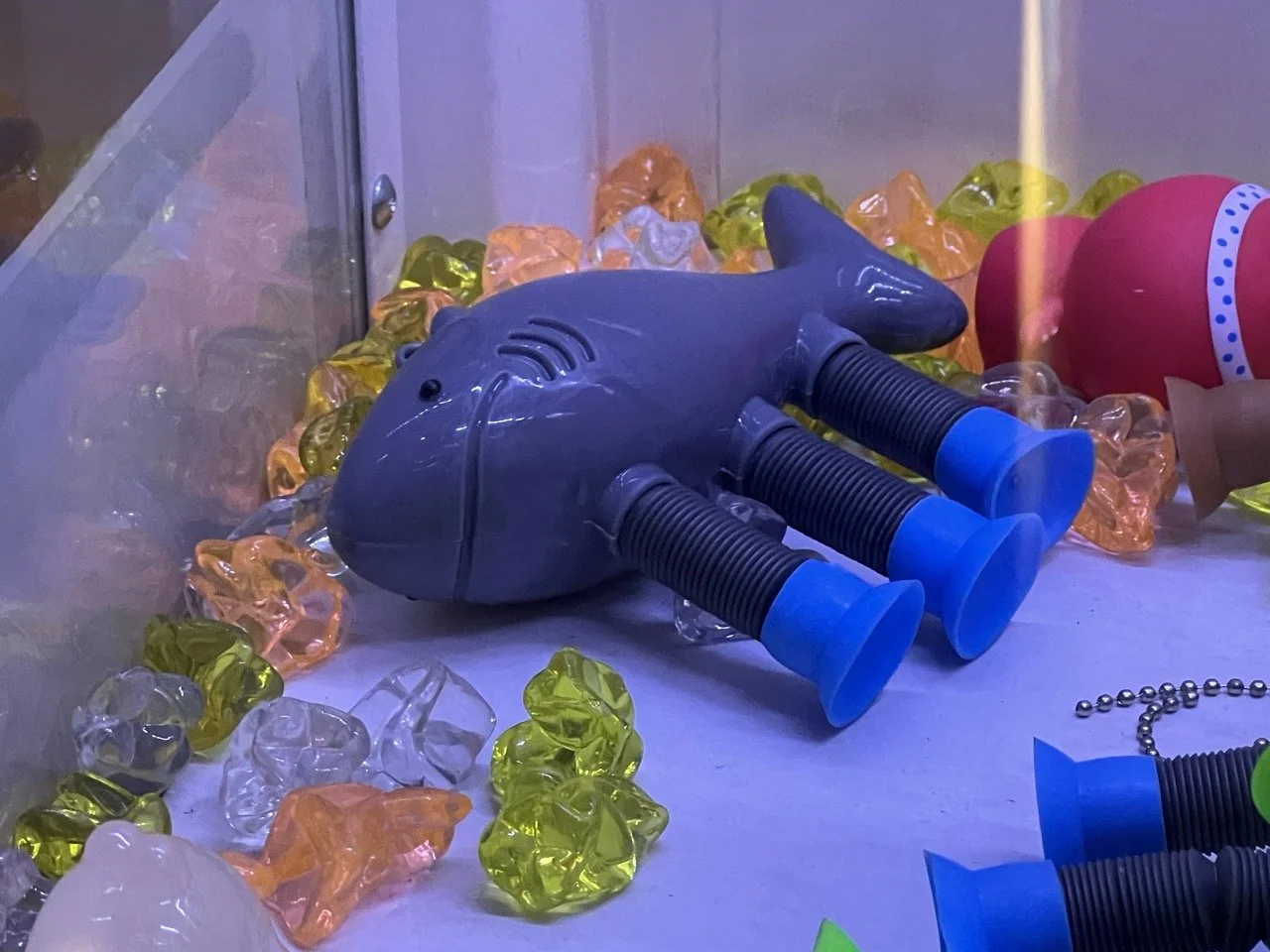
Real talk though, that thing looks weird. Would have been fun to stick on the outside of the rental van, though.
THE RULES FOR THESE GUIDES:
We are not here to “Well, Actually” the game. We aren’t the ones playing it, so we’re not going to judge the decisions of the people who were. So there.
We are just here to talk about the cool places featured in the game. We visit all of these places on our trips, and we love to see them get the attention they so richly deserve. Hence, this guide.
We’ll toss in some stray/fun observations at the end. I have thoughts I must share, or I’ll be bummed that I never shared them.
Each location we talk about will feature a bit about where it is, the history/details, and whether you should go or not. We’ll also have a “Pick of the Week” in there. There will also be links to our trips here and there, because the AI robots are trying to take our jobs and we would really like it if you traveled with us humans. We will never make you draw and complete challenges, unless you really want us to. I’ll have a deck of cards in my pocket when I’m guiding from now on… maybe.
ONE ADDITIONAL NOTE FOR TODAY: “Shima” and “Jima” mean “Island”, and most of the islands of the sea we’ll be discussing this week are best known that way (e.g. Shodoshima = Shodo Island), so the island names will mostly appear as “Shima” and “Jima” in here.
EPISODE 3: THE MAN ON THE HILL
THE SETO INLAND SEA (Both Teams)
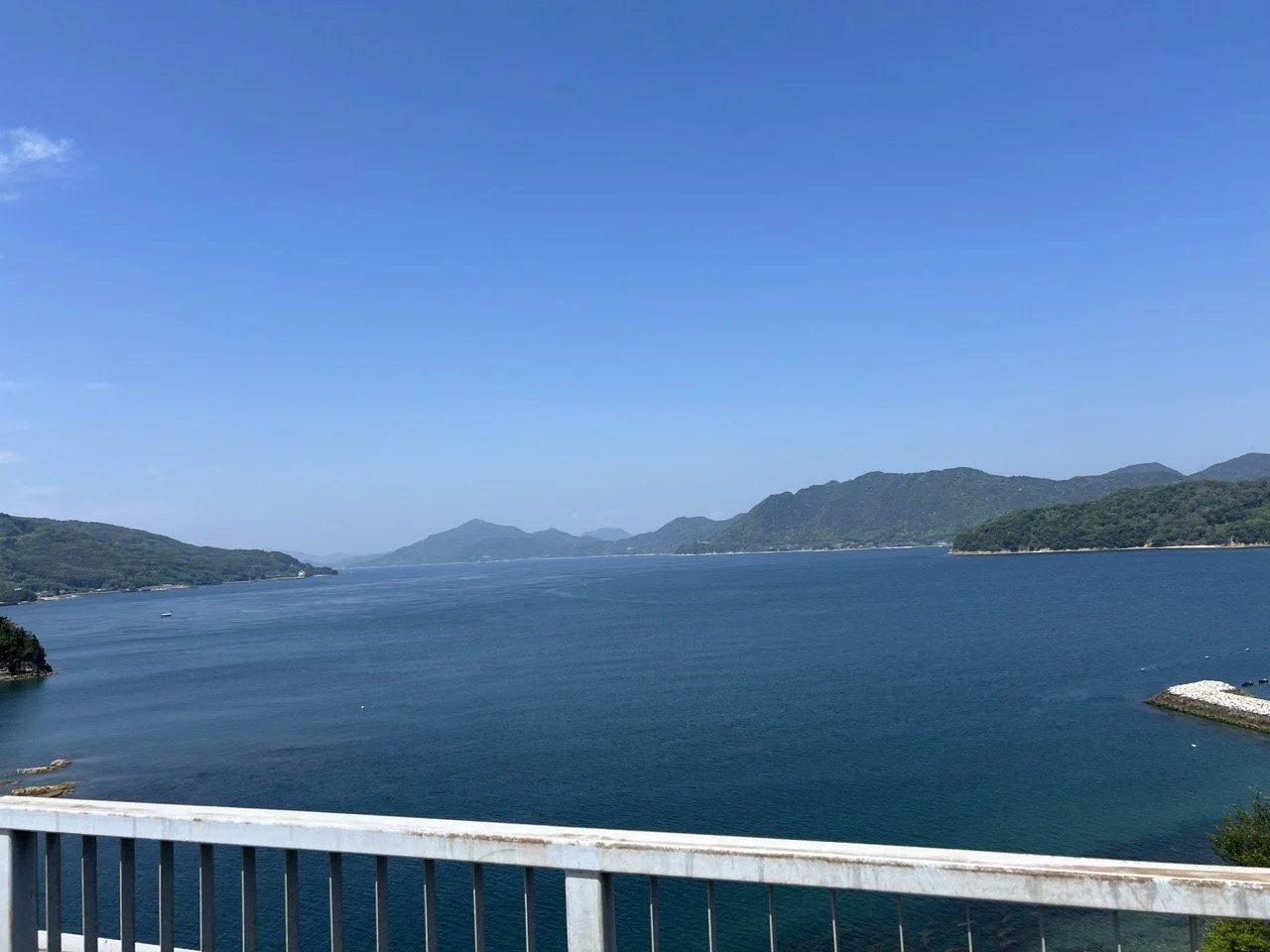
Where: North of Shikoku and South of Honshu, stretching roughly from the eastern edge of Yamaguchi Prefecture to Awaji Island (Hyogo Prefecture).
What: The big expanse of sea between Honshu and Shikoku, full of tiny little islands.
Details: This area is the center of our Seto Seasider trip next year, and for good reason; It’s hard to not get sucked into the majesty of the Seto Inland Sea. It’s a national park area that’s also one of the busiest waterways in Asia. It’s also very very beautiful; pretty much all of the “whoah, that view”-esque comments from the players this episode all center on the Seto Inland Sea.
The sea is home to more than 700 islands ranging from uninhabited rural hamlets to larger isles with multiple towns, such as Shodoshima. There aren’t many beaches; most of the islands are steep and covered in trees. However, this is also one of the reasons this area is so pretty; the landscape is truly one-of-a-kind! The relatively calm waters and countless ports are why this sea route has been used by merchants, traveling samurai, and other travelers since the beginning of recorded Japanese history. The popularity of the route over the years has led to a number of skirmishes in these waters, not to mention the presence of honest-to-goodness pirates that used to operate here. These days, the islands are primarily known for their natural gifts, like seafood and the many varieties of local citrus fruits from Mikan and Sudachi to Lemon and Yuzu. While rural depopulation has been a factor in the lives of island residents, the area has become very well known for its tourist destinations. The busiest of these are the number of “Setouchi Art Islands”, where the legendary Yayoi Kusama pumpkin art can be found along with hundreds of small art installations and exhibits.
There’s no way we can properly summarize all the highlights here, but some of the Seto Inland Sea islands we’d like to shout out include the aforementioned Shodoshima (especially the Marukin Soy Sauce Factory, which we featured on Taste of Shikoku Kyushu), Okunoshima (aka the Bunny Island, on this year’s Pawprint Pathways), Naoshima (the most famous of the art islands), the isles along the Shimanami Kaido (more about that in a bit) and the cute Kitagi Island in Kasaoka (more about that in a little bit as well…).
Should you go? If you go to anywhere in the vicinity of the Seto Inland Sea, you should at least enjoy the views of it! Some of the best spots: Mt. Misen on Miyajima (Hiroshima), anywhere on the waterfront area in Takamatsu (Kagawa), and any of the islands inside the sea area. There are a lot of pretty train rides that sail by parts of the sea, but the best view is from the JR Kure Line between Hiroshima and Mihara via Takehara and Kure.
Or hey, you could just hop on a bicycle and head towards
THE SHIMANAMI KAIDO + SHIMANAMI CYCLING ROAD (Sam & Ben Team Alpha Force)
Where: From Onomichi (Hiroshima) to Imabari (Ehime)
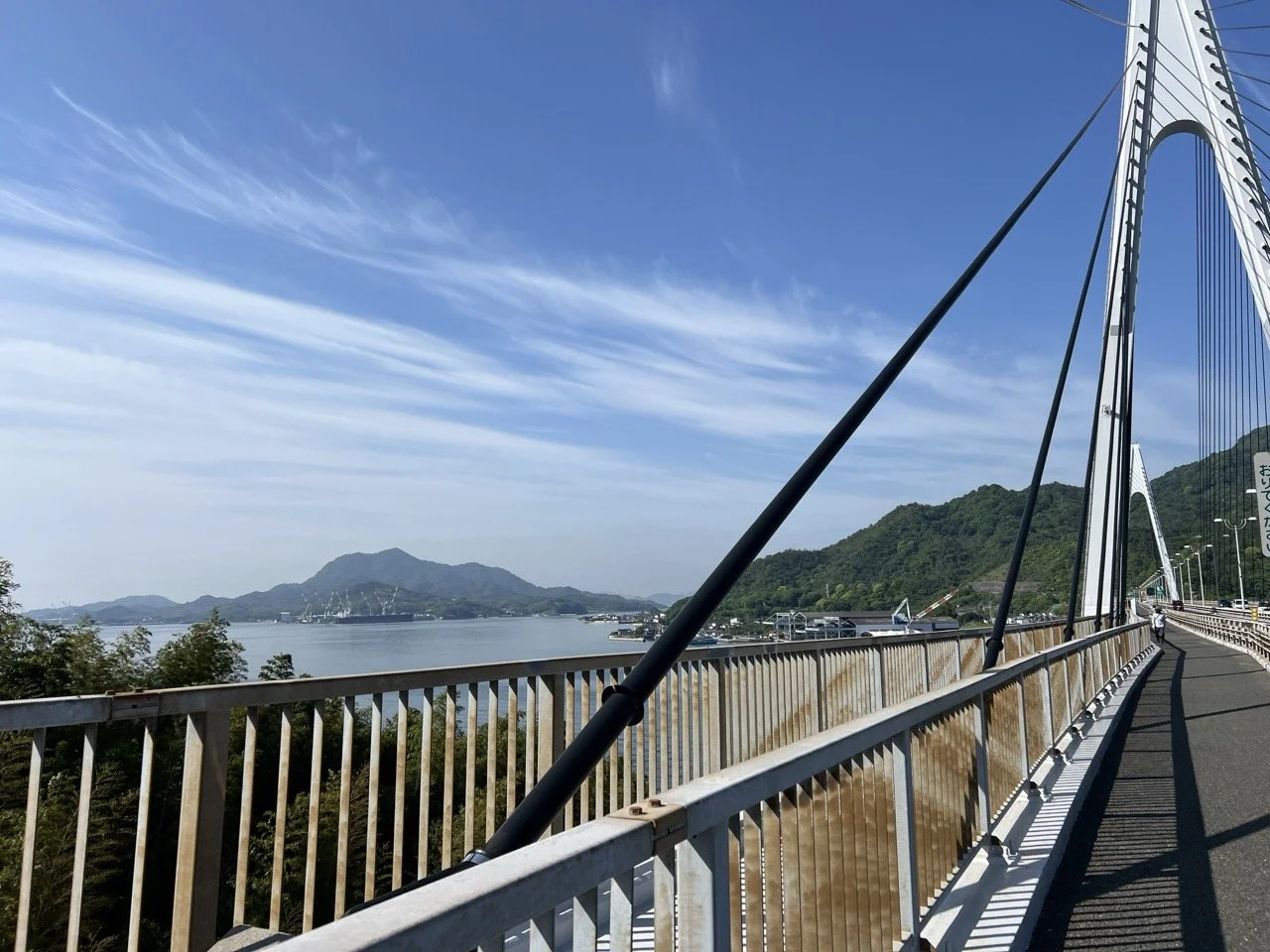
What: Seven suspension bridges that link Honshu and Shikoku via a series of islands in the Seto Inland Sea that also have Japan’s best cycling path.
Details: The rugged, less-than-flat land that define the islands of the Seto Inland Sea are also why connecting Shikoku to Honshu in the first place was, to put it bluntly, a bit difficult. Building the majestic bridges you see throughout this episode (the biggest of which we’ll get to later) required a lot of work in clearing land, figuring out where bridge supports could go, and studying what happened to similar bridges in similar climates (particularly the collapse of the first Tacoma Narrows Bridge). In fact, before 1988, you literally could not get to Shikoku by rail or car at all; boats and planes were the only way there. In the decades following the end of the war, the Japanese government, then going through the first stages of their economic boom, decided that was, well, dumb, and began work on bridge infrastructure to connect Shikoku and Honshu. The late 1990s saw the last two major connections open: the Akashi Kaikyo Bridge in 1998, and this collection of SEVEN bridges spanning what many consider the prettiest part of the Seto Inland Sea.
Sam and Ben spot one of these bridges from the train to Kasaoka, and considering how much Sam likes to run/hike/ski, I sincerely hope he makes it back here, because there is probably no better place to experience Japan from behind a pair of handlebars than here. When the route was built, foot and bicycle paths were added to six of the seven bridges, creating a very picturesque ride over bridges and past small towns, one of Seto’s few beaches, visible currents darting between the isles, fishing ports, and more. The entire cycling route runs just over 80km/50 miles from Onomichi Station (from which you catch a frequent, four-minute ferry to the start of the route on Mukaishima) to Imabari Station (a major stop on the route for Adam and Tom’s train in this episode). Some people bike the entire route, while others do more; you can do the entire trek in four hours if you go crazy and don’t stop, while most others (myself included) prefer a leisurely, make-stops-along-the-way route that takes six to eight hours. There are a few hills on the route (especially the approach to some of the bridges), but if you have moderate experience with cycling and don’t mind taking a ride that lasts as long as this one, it’s well worth the experience.
Not feeling like biking? That’s fine too! If you like, buses run along the route, but we suggest getting a ferry to Setoda Port on Ikuchijima to wander among the cafes and shops there, enjoy the views, and breathe in all this place has to offer.
Should you go? If you like cycling at all and are in Japan during the spring or fall, you should really, really, really add Shimanami Kaido to your list. Likewise, if you want to check out parts of the Seto Inland Sea but don’t want to do the art islands, these isles are probably some of the best spots you can check out.
Onomichi (at the start of the route) was one of the main stops on Omakase 2025, so here’s the video of that adventure and our cool experiences there. The good views come standard. ❤️
KASAOKA (Sam & Ben Team Alpha Force)
Where: Kasaoka City, Okayama Pref.
What: A small city in the southwestern most part of Okayama Prefecture.
Details: Kasaoka sits just over the border from Hiroshima Prefecture and Fukuyama City, and like most of the other cities in this region, their identity is also tied to the Seto Inland Sea. The main railway terminal is just a short stroll from the city’s port, which runs ferry service to the islands in the sea that are within its boundaries. While the city’s most populous areas lie around its station and the Minohama area where the Dinosaur Park is, the most legendary spot in the city limits is Kitagishima, which is home to a famous granite quarry that has lent its stone to countless cultural treasures and famous buildings across Japan. You can explore a lot of the old quarry areas with a visit to the island via Oura Port.
If you’re like me (= a cat person), you might be more interested in Manabeshima, which lies south of Kitagishima and is home to a very large population of cats. It takes a while to get there, but if you want to enjoy some really dynamite views, sip some coffee at a cafe, and pet some very adorable cats, this place will be your own little slice of heaven.
Should you go? If your ears perked up at the cat island mention or the quarry, give this place a peek.
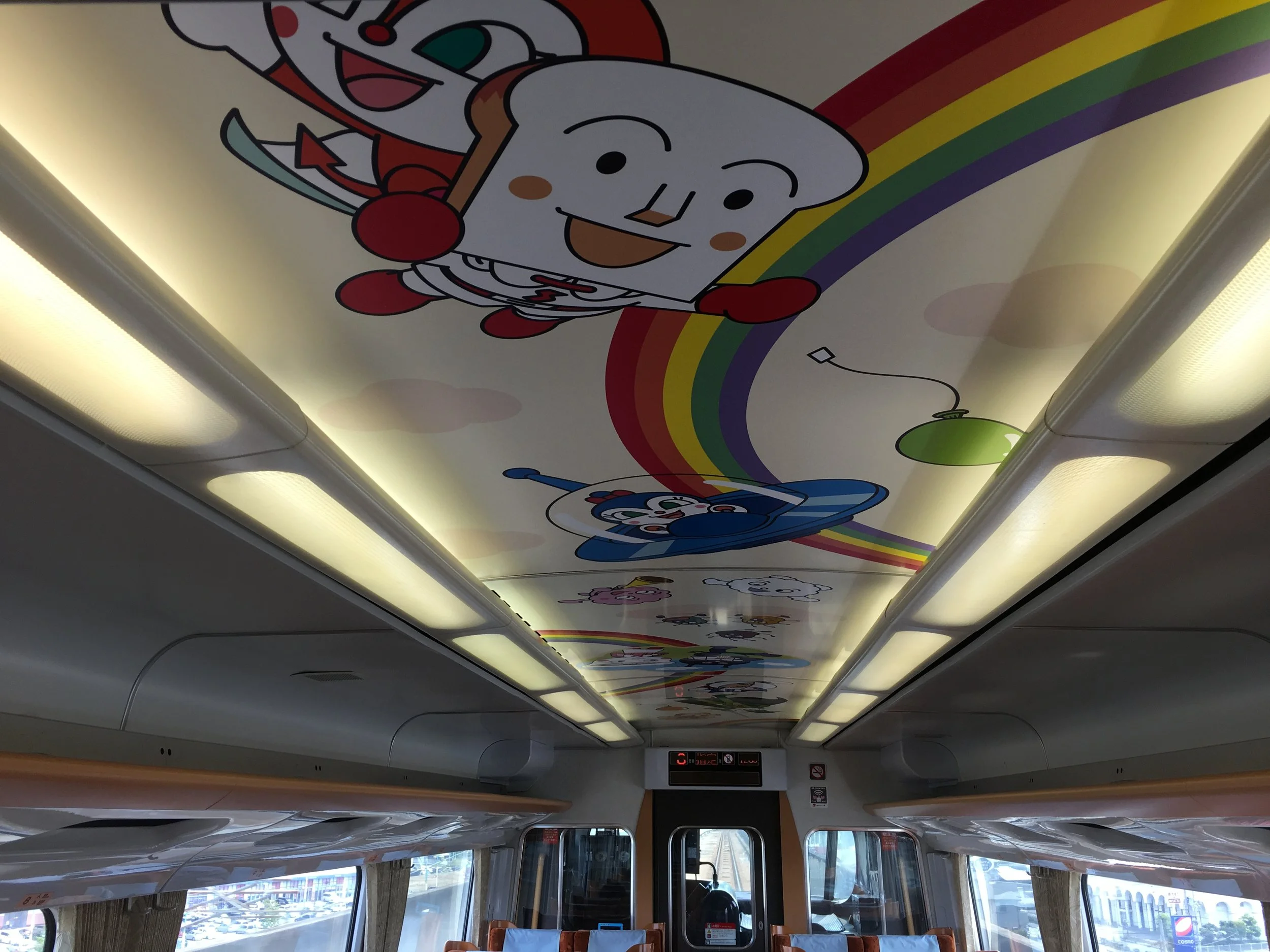
SHIOKAZE/THE ANPANMAN TRAIN/ (Adam & Tom)
Where: Runs between Okayama City, Okayama and Matsuyama, Ehime.
What: The limited express service connecting Okayama (and the Shinkansen network) to Shikoku’s largest city.
Details: The Former National Railway (Kokutetsu/JNR) launched the Shiokaze limited express service between Takamatsu (Kagawa) and Matsuyama in the 1970s, but once the Seto Ohashi was completed in 1988, this train went into service linking Okayama and Matsuyama and has been a popular choice for travelers ever since. The line travels through the major population centers of Imabari and Marugame along the coast to Okayama, where you can connect to the Shinkansen and many other major lines on Honshu.
This is one of the lines that occasionally hosts the Anpanman Train Set, which Adam and Tom are lucky enough to get. As Adam mentions, Anpanman is one of the most popular children’s manga series of all time, and the family of creator Takashi Yanase (and Yanase himself) are from/lived in Kochi Prefecture in Shikoku’s south. As such, the popular train sets are utilized on many limited express routes that cross Shikoku, including the Shiokaze, the Nanpu (Okayama to Kochi), the Ishizuchi (Takamatsu to Matsuyama), and many others.
Should you go ride? If you’d like to ride the Anpanman Train, there are lots of routes that host it on Shikoku. The bad news: there aren’t a lot of good online resources in English to point to which Limited Express trains will have the Anpanman cars. Your best bet is to check at a JR Shikoku Station when booking tickets; the agents there will be able to get you what you want pretty easily. If you’re buying/using the All Shikoku Rail Pass (which we consider the best rail pass out there, since the nationwide one kinda sucks now) just ask when you pick up the pass.
The Shiokaze is worth the time if you are going to Matsuyama from Osaka or the Okayama area, but if you are coming from the west, the express jetfoil ferry from Hiroshima to Matsuyama is faster.
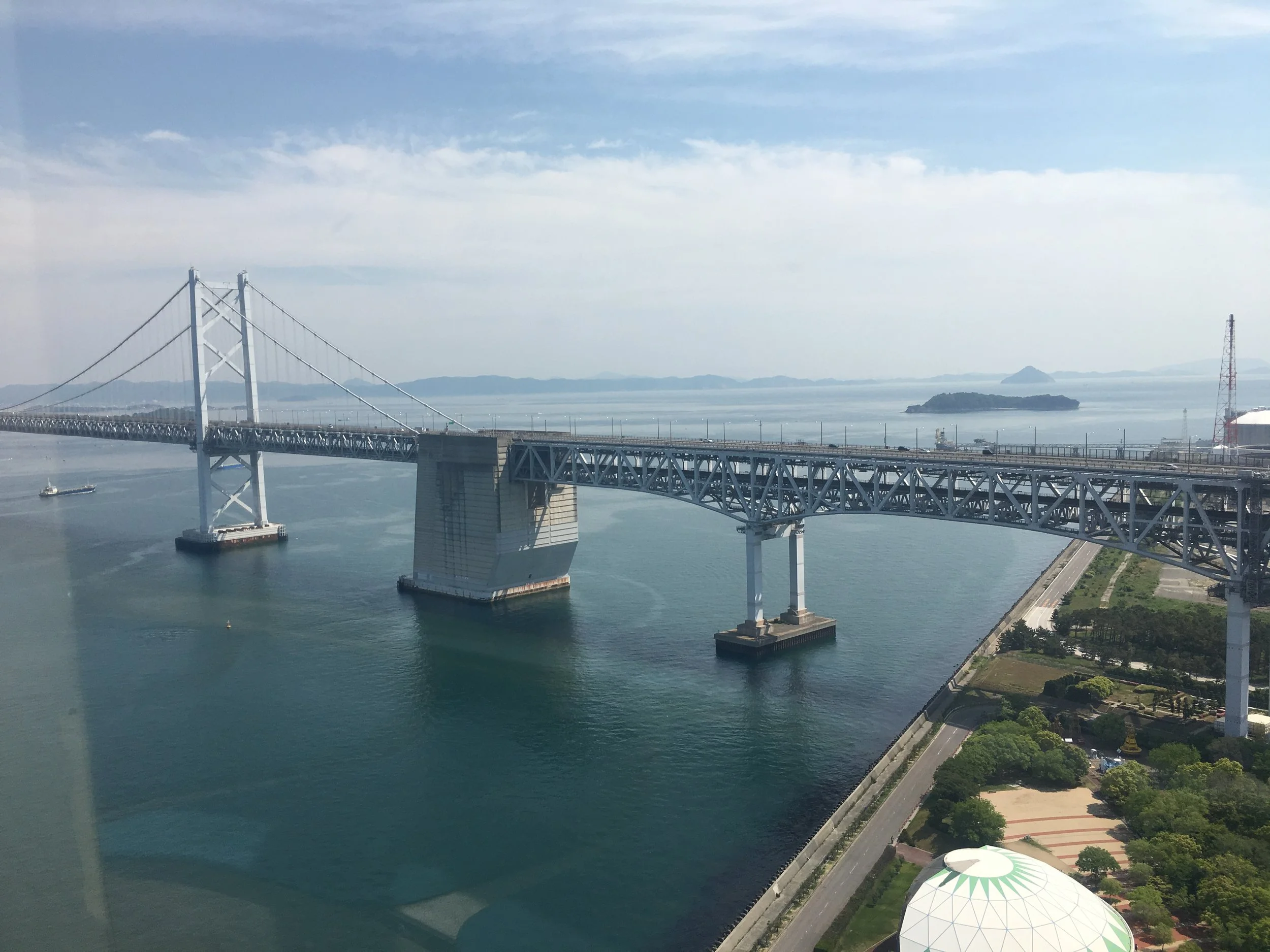
THE SETO OHASHI (GREAT SETO BRIDGE) (Adam & Tom)
Where: Between Sakaide, Kagawa Pref. and Kurashiki, Okayama Pref.
What: One of the most important rail bridges ever built, and the central link of the three bridge routes between Honshu and Shikoku.
Details: Adam and Tom both marvel at how cool this bridge is, and the attention is justified: this bridge literally transformed the link between Shikoku and the rest of Japan forever.
One of my favorite pieces of Japan transit trivia is this: Until 1988, only Honshu and Kyushu had rail connections. All four islands became connected within a MONTH in Spring 1988: the Seikan Tunnel between Honshu and Hokkaido opened on March 13, 1988, and this bridge followed on April 10. Until this date, rail travelers to Shikoku traveled on JNR/JR branded ferries and hovercraft (yes, hovercraft! You know, that thing that Jackie Chan gets to drive at the end of Rumble in the Bronx. Seriously, it looked like this) between Uno, Okayama and Takamatsu, Kagawa. Once the bridge was finished, that all changed; frequent train service now flies between Okayama and Takamatsu multiple times an hour, and express service connects Shikoku’s larger cities at speeds once considered unheard of. The bridge is also double tracked for Shinkansen service, although there isn’t a Shinkansen over the bridge yet (we won’t get into the “Shikoku Shinkansen” idea here since it would take forever, but FYI, it’s a thing). Aside from enjoying the views from the towering bridge itself, the park near the bridge on the Sakaide side also includes an observation tower with views of the bridge and panoramic views of the surrounding parts of the sea.
Should you go? If you’re traveling through here, crossing this architectural marvel is probably going to be necessary anyway; might as well enjoy it!
FUKUYAMA CITY (Sam & Ben Team Alpha Force)
Where: Fukuyama City, Hiroshima Pref.
What: The central metropolis on the eastern edge of Hiroshima Prefecture.
Details: Sam and Ben go back here to change trains, but I figured that this area would be of interest to many of you, because Fukuyama has a lot of nice spots worth a look.
Fukuyama Castle is hard to miss; it’s right next to the station and visible from the platform. It’s a faithful reconstruction of the castle built under shogun Mizuno Katsunari, who lorded over this region within what was the Bingo domain under the Fukuyama clan that gave the city its name. The surrounding park is pretty magnificent as well if the weather is good, and its probably one of the best cherry blossom viewing spots in this area.
Just thirty minutes south by bus is the port of Tomonoura, which we have featured on numerous trips, including Anime De-Tour, Animated Summer, our forthcoming Sake trip, and as an optional side trip for next summer’s Best of Japan. Considered one of the most picturesque fishing villages on the Seto Inland Sea, the town has a wealth of things to explore, including amazing views from Io Temple, hiking and a unique onsen/hot spring at the offshore Sensui Island, and a busy merchant quarter by the port that celebrates a visit by Meiji Restoration figure Sakamoto Ryoma. The town has a ton of laid back cafe spots, a really good brewery for fruit wines, pottery shops, and a number of ryokan offering a traditional night’s stay. All of this charm is why Hayao Miyazaki stayed here and used the town as a model for his film Ponyo, so it’s no shock that later on Hollywood came calling. Tomonoura was one of the main shoot locations for the Wolverine film set in Japan. Fukuyama Station even stood in as a substitute for Osaka Station in the shoot, and there are many spots in the village that you may recognize from shots of Hugh Jackman running around being the best X-man he could be.
Should you go? If you’re in the area, Fukuyama Castle is one of the most convenient reconstructed castles that accommodates a quick visit. Tomonoura is well worth the visit if you are a fan of Ponyo, amazing sea views, or just want to say that you walked on the streets that once accommodated Hugh Jackman at his hunkiest*.
KORAKUEN + OKAYAMA CITY (Adam & Tom)
Where: Okayama City, Okayama Prefecture
What: The capital of Okayama Prefecture, former capital of the Bizen Province and gateway to Shikoku and the Seto Inland Sea. Also: great.
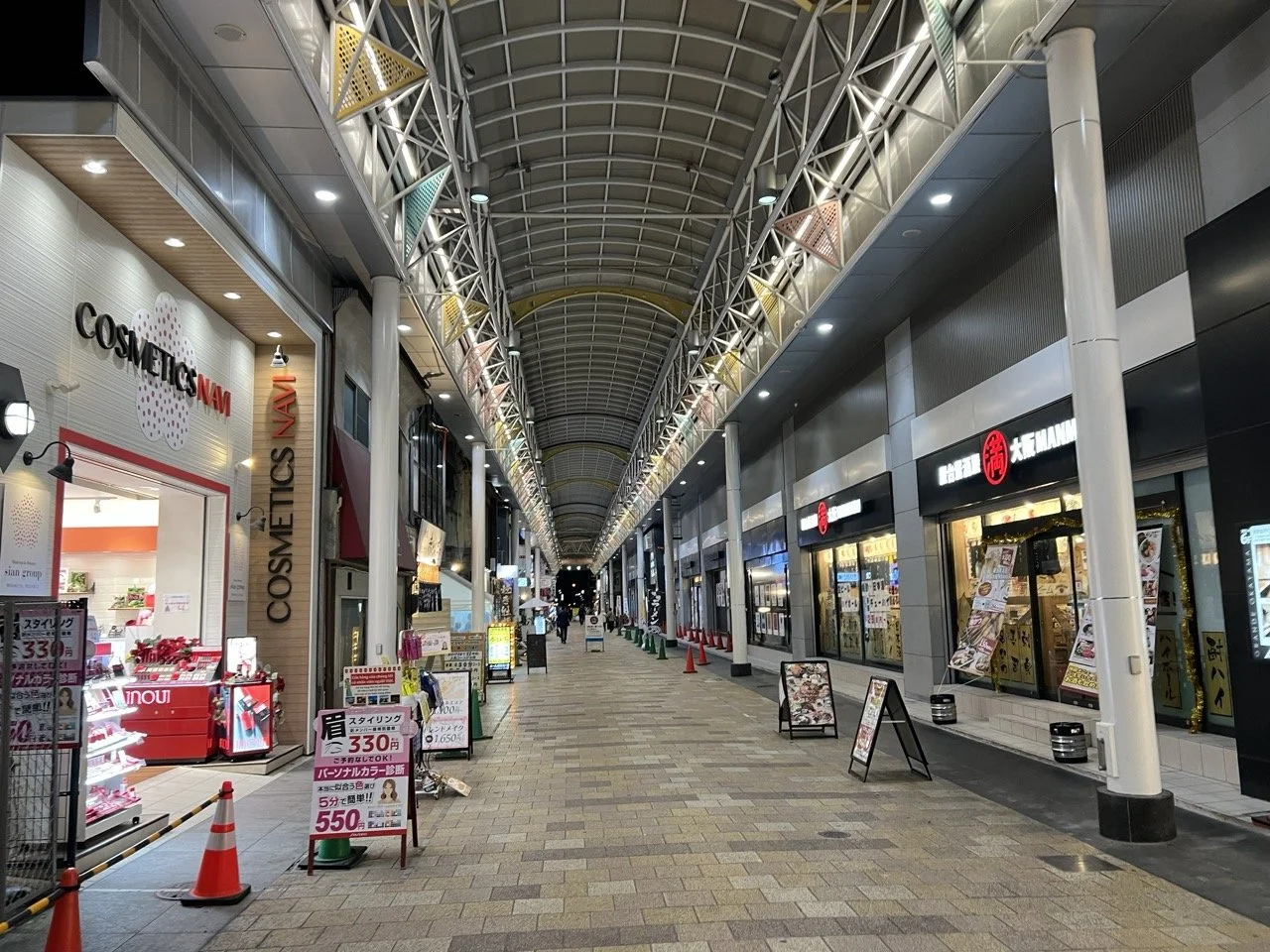
Details: Okayama is best known to travelers as “that place where you change trains.” It’s kind of a shame; the city is home to over 700,000 people, making it larger than a fair number of major metros in the USA. However, I must admit that the locals also have a knack for underselling their town; we’ve taken a number of groups to Okayama, and each time we’ve run into locals who tell us that “even Japanese people think one visit to Okayama in their lifetime is enough.” On the surface, that seems true, but I think I speak for all of our guides when we say that perhaps the city just doesn’t want to deal with what might happen when people discover how neat this place actually is. It’s also part of Seto Seasider (hint hint).
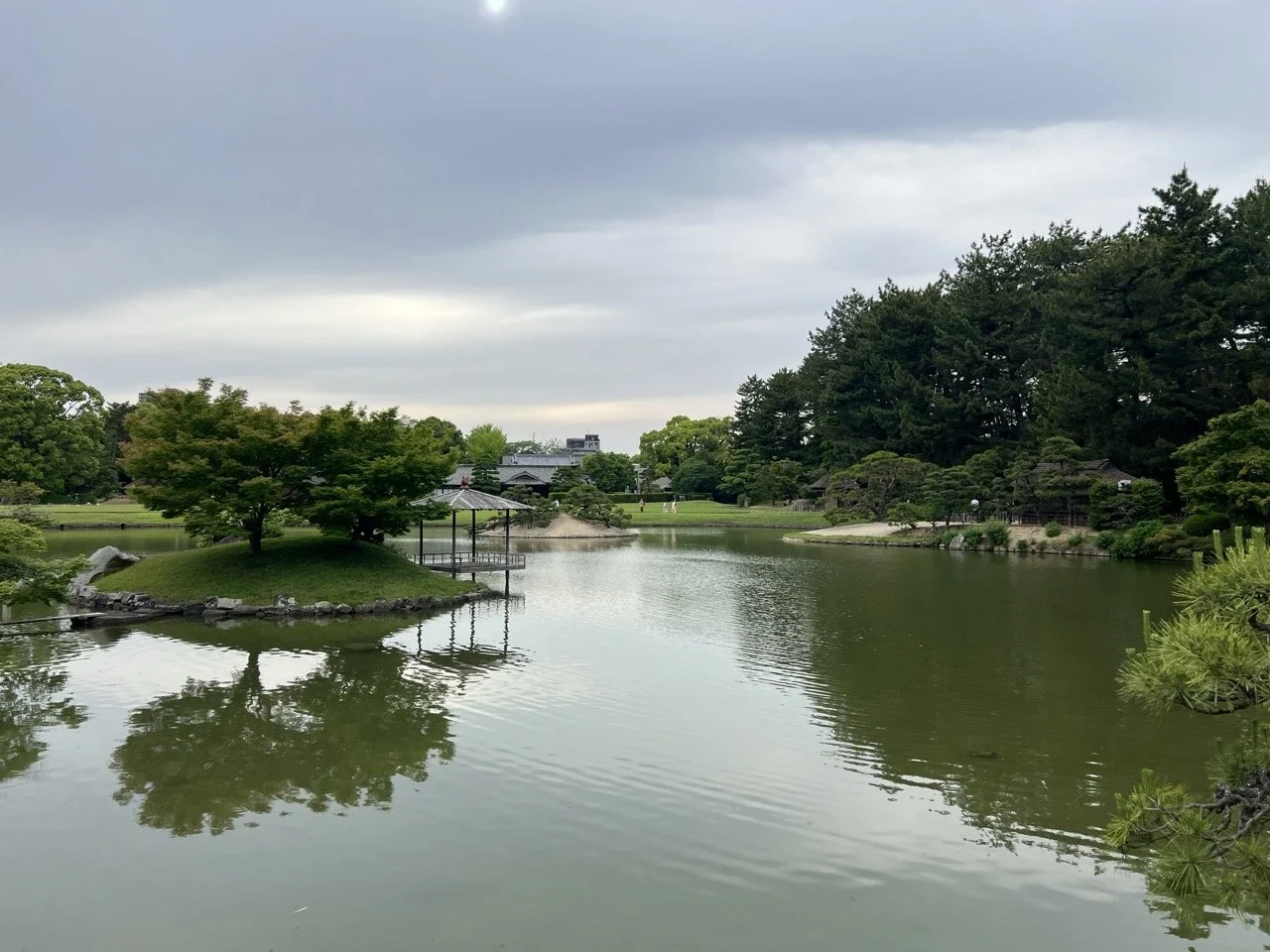
Let’s start with the star attraction: nothing, and I mean nothing, gave me more joy in this episode than watching Adam get excited about visiting Korakuen Garden. Constructed by Tsuda Nagatada, a retainer of the daimyo Ikeda Tsunamasa, this garden was completed in 1700 and opened to the public after the Meiji Restoration as Korakuen. It’s considered one of Japan’s “big three” Japanese gardens along with Kenrokuen (Kanazawa, Ishikawa) and Kairakuen (Mito, Ibaraki). The garden’s original claim to fame was its “moon viewing” parties during the full moon, and if you are here when the moon is out in the late afternoon, you can see why. Parts of the garden were used for farming during World War II due to shortages, but in the postwar era, the garden returned to its full form. Standing in the shadow of a recreation of Okayama Castle, the locals have only made the garden shine brighter, especially during seasonal events when fall illuminations fill the garden with light, complement the moon, and also feature the castle. Seriously, look at this:
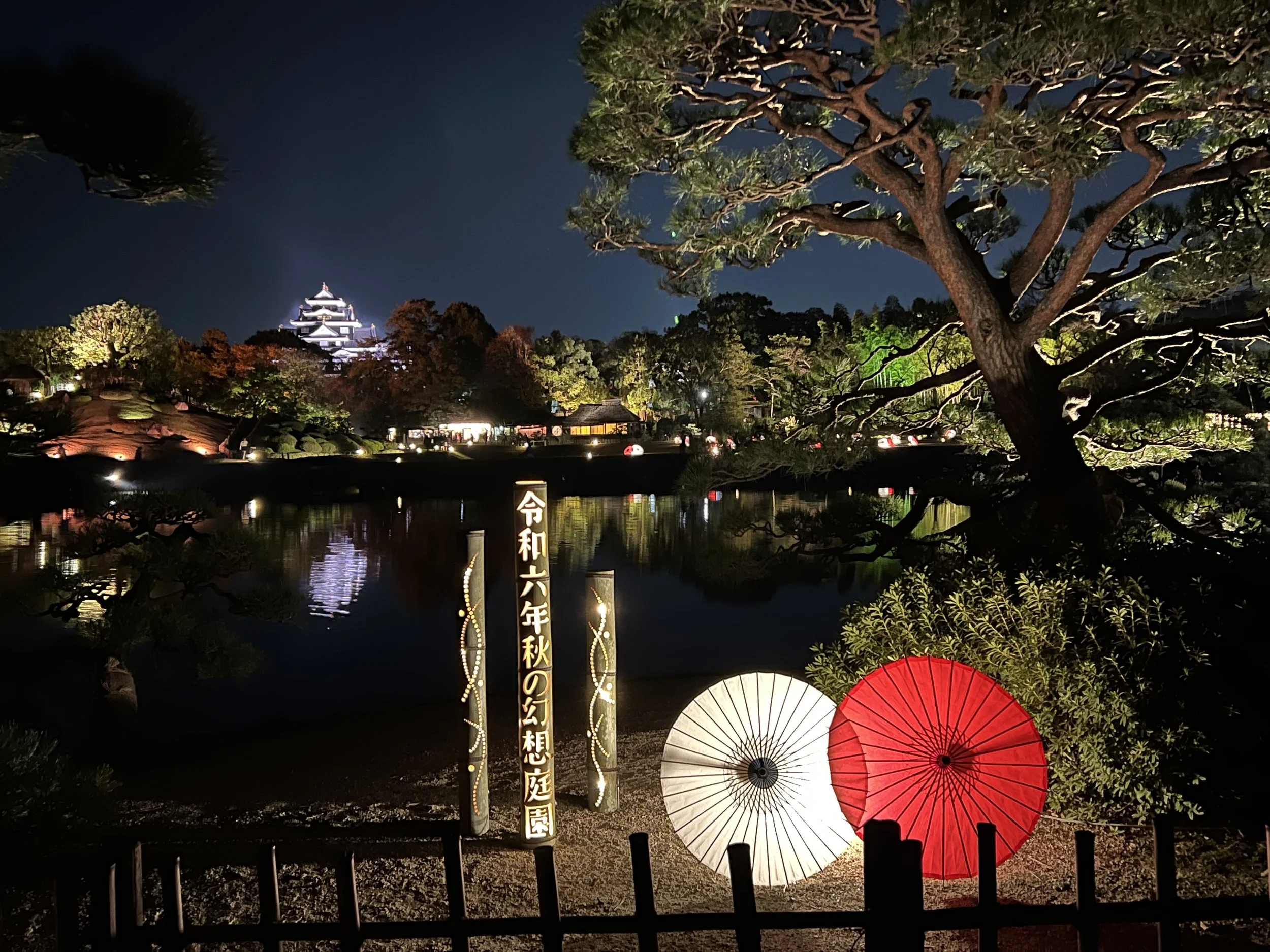
Good grief, Charlie Brown, that is gorgeous. The garden sits just a short distance from the Shiroshita Tram Stop, and the walk to and from the castle/garden features a number of excellent restaurants, coffee stops, and even a little boat landing by the Asahi River where you can rent swan and peach-shaped paddle boats to ride along the river. If you are on a trip to Japan with your significant other and are looking for a romantic place, you owe it to yourself to check this area out.
Aside from the garden and Okayama Castle, to the west lies Nishigawa, an old canal that was redeveloped into a north-south running entertainment district in the 1970s. Bars, good restaurants, and even the local fish market are near here, plus a wealth of shopping stops between this area and the station. If you are going to anywhere in the Seto Inland Sea, Okayama is a popular jumping off point, especially to the art islands of Naoshima, Teshima, and Inujima.
Should you go? If you are passing here during the spring or fall when the seasonal illuminations of Korakuen are happening, RUN, do not walk, to Korakuen in the evening. Otherwise, you should still go. Along the way, definitely get some good local food around the tram stops or in Nishigawa.
Okayama is one of those cities that’s often overlooked, but there’s another one that’s overlooked and, considering its proximity to other popular stops, it really shouldn’t be. Come to think of it, why limit ourselves to one pick this week? Let’s do two.
KOBE (Sam & Ben Team Alpha Force)
Where: Kobe City, Hyogo Pref.
What: The third “major city” in the Kansai area, along with Osaka and Kyoto. Tourists don’t go there as much for reasons we cannot possibly understand.
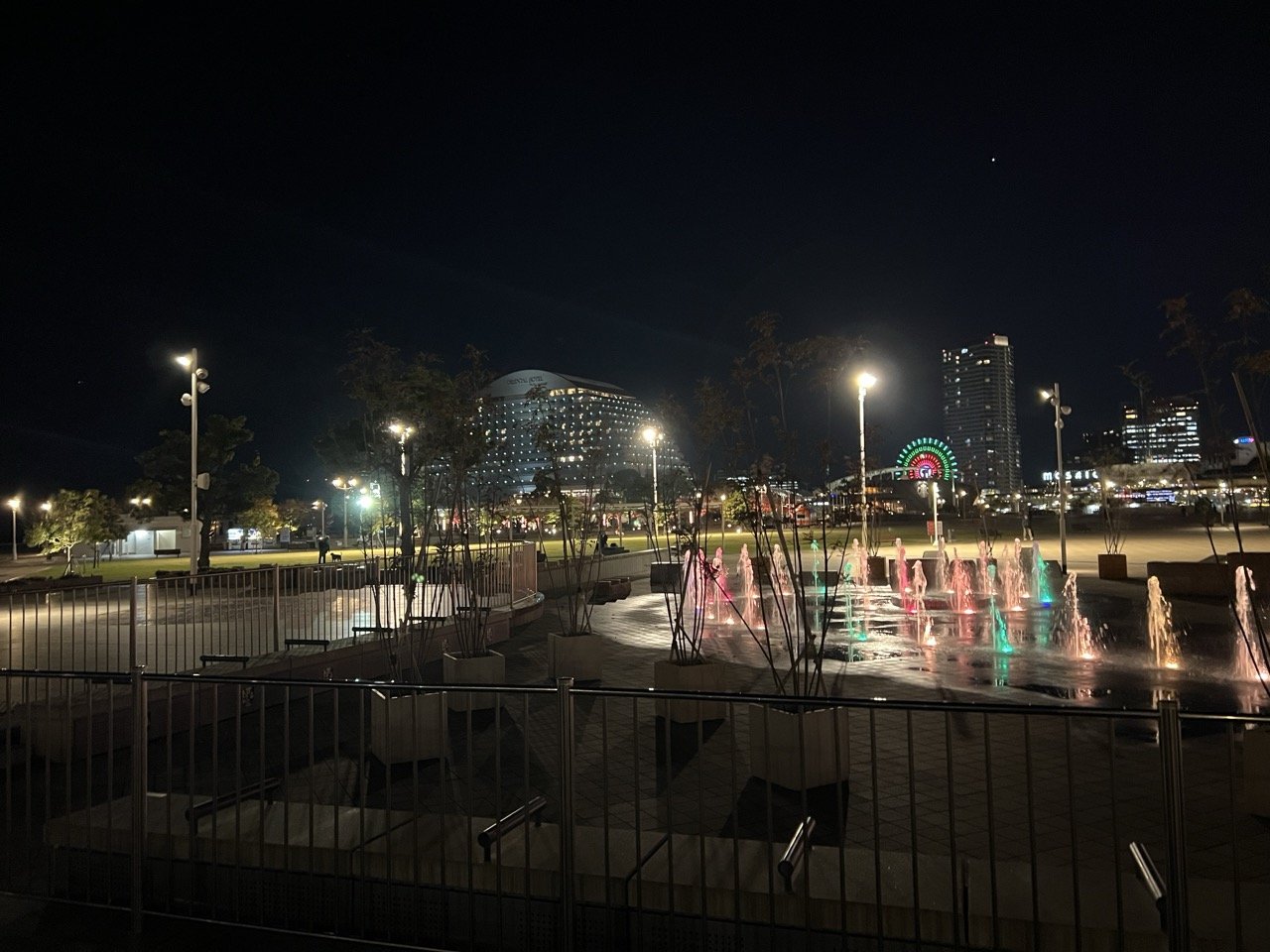
Details: We at PacSet aren’t exactly surprised that Kobe isn’t as well-traveled as other spots in Kansai; it has a pretty set image in the west. Even the boys joke about it being “known for the beef” on The Layover, and yeah, the steak is part of Kobe’s charm, but allow me to sell you on why this place rules. You know, aside from the fact it’s only 20 minutes or so from Osaka. We built an entire trip around this city, folks.
Kobe is one of the ports the Tokugawa shogunate first opened to foreign trade after Commodore Perry showed up in 1853 and demanded the country open its borders. There are a few other cities that carry this distinction that were shaped by their identity as foreign ports, most notably Yokohama and Hakodate. Kobe’s own history as a merchant town before it was opened, coupled with it being capital of Hyogo Prefecture, made the city a huge destination – but the subsequent foreign settlements and the geography of the entire city have combined to make it one of the most unique major cities in all of Japan.
Kobe is home to more than a million people and is part of the larger Kansai area, so it goes without saying that there’s more good food, shopping, and attractions than you could hope to complete in a single visit. The city is situated on a thin strip of land that then hits the mountains, which means that walking here is convenient, but also a workout. All those hills also mean that the urban vistas here are among the best Japan has to offer. Near the ropeway (which we’ll get to in a minute) is the Kitano Ijinkan, an old collection of western homes built by rich foreign merchants so they could gaze out over the bay and watch their ships/feel important. Kitano is naturally home to many of Japan’s most famous bakeries and tea shops, as well as the old Kitano Hotel that is credited with popularizing the tradition of afternoon tea in Japan.
Speaking of food: yes, you’ve heard of the beef, and it’s well worth trying (there are countless beef spots around Sannomiya Station), but for a lot of locals, Kobe means dessert. There are more places for a fancy treat in this city than the mind can comprehend, from upscale cakes and pies to gelato and more. The most popular dessert is Kobe Pudding, which is sold to go in a few spots but best enjoyed fresh at a cafe if you can do so (we strongly recommend Franz for their rich, cream-topped, life-changing pudding served in decorative jars).
Along the seaside is the massive Meriken Park and former port, which is also where the memorial to the devastating 1995 quake can be found. The quake changed life for everyone in Kobe and the surrounding area, but they’ve bounced back in a big way, and the waterfront often holds fairs and events to build community. The portside area, known as Harborland, is home to a few nice malls (notably Mosaic) which house restaurants, a waterfront Ferris wheel, and bay cruises that carry visitors under and around the Akashi Kaikyo Bridge mentioned at the beginning of this piece. It’s a truly magical city with something for everyone, with a lot of areas that are just a lot of fun to explore.
Should you go? If your trip goes to Kyoto and Osaka, it should go to Kobe as well if you read any of the stuff above and thought, “wow, that sounds cool.” Speaking of which, there’s one more place in Kobe we need to discuss:
KOBE NUNOBIKI HERB GARDEN ROPEWAY (Team Sam & Ben Team Alpha Force)
Where: Kobe City, Hyogo Prefecture
What: A really cool ropeway that goes over a waterfall to a very scenic Herb Garden.
Details: Of all the spots featured on Jet Lag: Japanorama thus far, this is the one that earned the biggest number of “wait, I’ve been there!” type of responses from our alumni. You know, like that Leo DiCaprio meme from Once Upon A Time In… Hollywood where he’s pointing at the TV. Yes friends, we’ve been there.
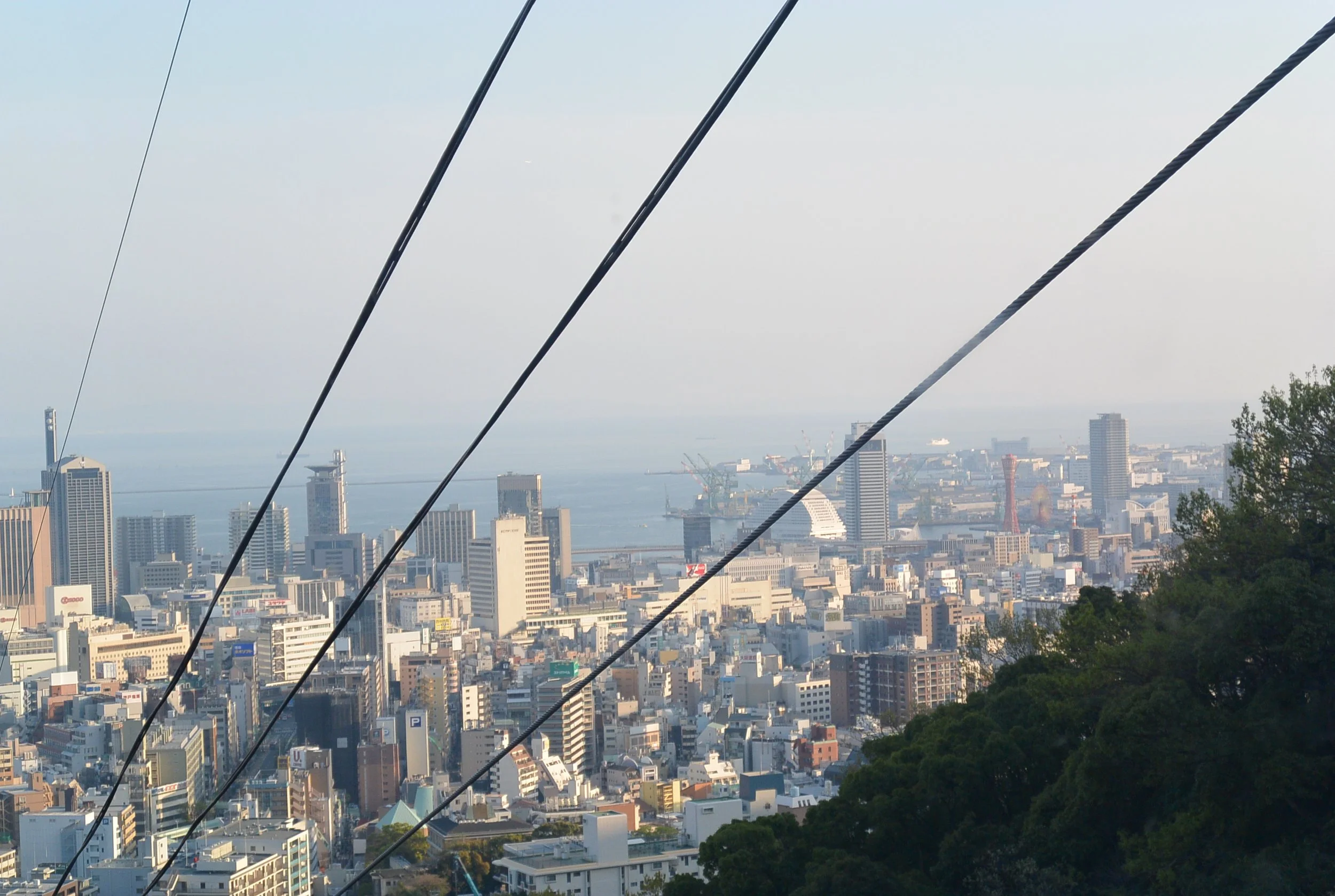
Situated above the Kitano Ijinkan adjacent to Shin-Kobe Station, the Nunobiki Herb Garden Ropeway is a two-stop ropeway that leads to a mountaintop herb garden and overlook that offers some of the best views of the Kansai area anywhere. The garden most definitely leans into the western character of Kobe; the herbs and teas that grow here are almost entirely western imports like lavender and traditional tea blends, but they are very well executed. By the lookout, there’s a food stand that holds an Oktoberfest in the fall, so depending on the season, you might hear some accordion music and have a bratwurst or two as you gaze out over the urban expanse. From the top, most visitors walk through the garden downhill between the top and center stations. The highlight here, aside from the free to use hammocks, is the gorgeous greenhouse that not only has a phenomenal drink and dessert menu, but a small lavender foot bath you can soak your feet in as you take in the views. For an experience that costs 2000 yen, it’s quite the bonus!
It should be mentioned here that Sam and Ben actually don’t go to the top of the ropeway; just to the center station, where Ben turns around to try and spot Sam again. Most of the spots you’ll hit when you visit the garden will be past where the filming took place, but you will get to travel over the Nunobiki Waterfall, so that’s well worth it. As far as ropeways in Japan go, this one has some of the best views of any of them. As a side note, we have to shout out to Sam for doing the portion of the hike up the mountain that lies between the lower station and the center one; it is not an easy climb!
Should you go? If you are in Kobe and want to do a little more laid-back exploring, the Herb Garden and Ropeway should be at the top of your list.
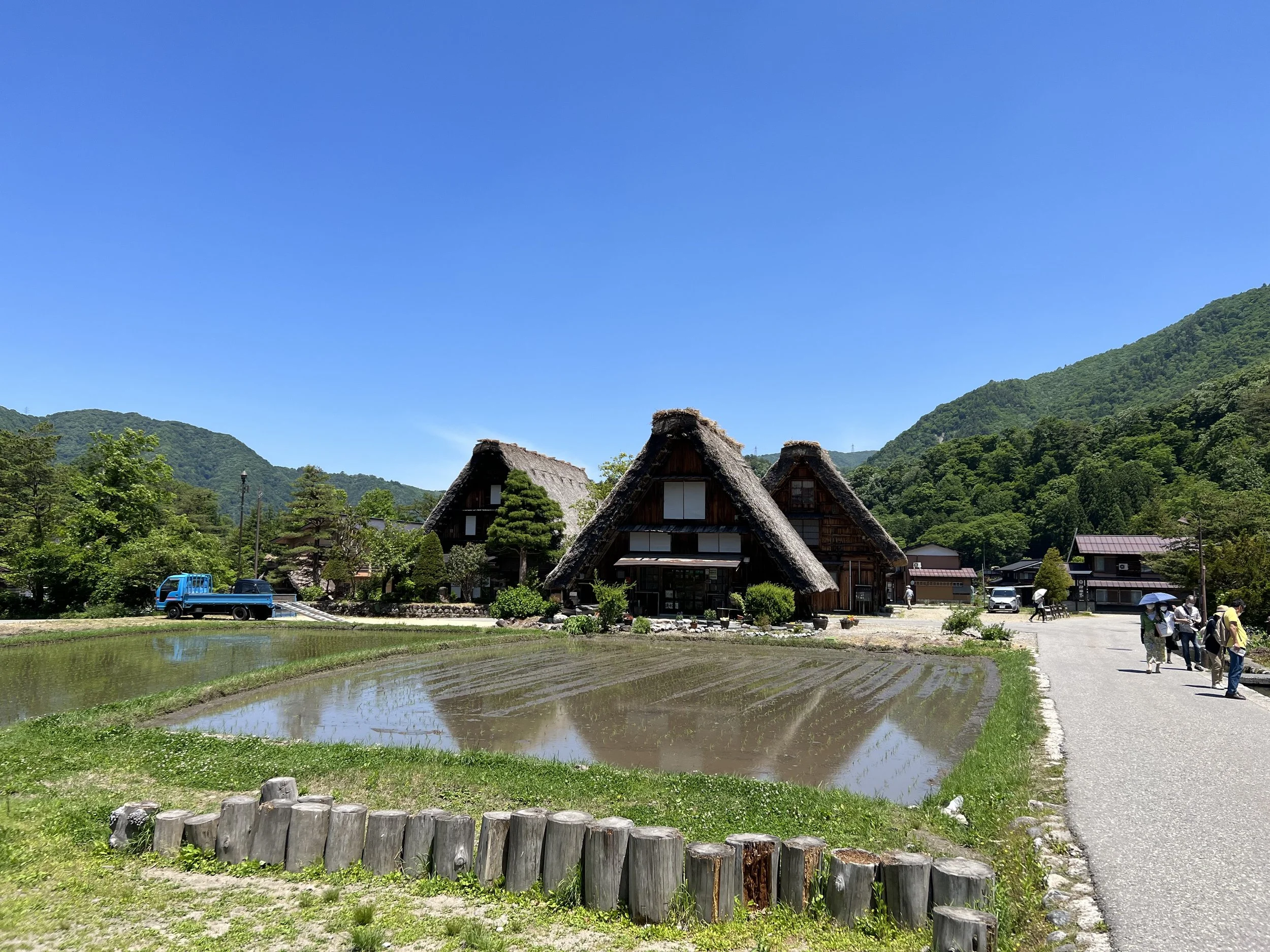
GASSHO-ZUKURI
Yes, the thatched-roof farmhouses are really cool. Adam is correct in saying that they are mostly in northern Gifu and southern Toyama Prefectures, and for good reason; the incredible volume of snowfall these regions get absolutely demand a pointy roof. Of all the places you can experience the Gassho-zukuri, the most famous is Shirakawa-go in northwest Gifu, about an hour outside the also-awesome city of Takayama.
If you want the full experience, you can spend an overnight in the Shirakawa-go homes, but if you want to do this, book early; they’re a popular spot!
NEXT WEEK: OSAKA (Both Teams)
Evan’s note: I thought about going into detail about Osaka this week, but since the teams just got there and only one of them will be able to finish the challenge the cliffhanger of the episode ends on, I figured we’d go into detail about it next week. Besides, I studied abroad halfway between Osaka and Kobe, and rest assured I will have a ton to say next week. Whee!
Random Notes
As someone who designs trips for a living, I very much am one of those nerds who loves hearing about the finer points of game design choices on The Layover. :)
“Hai” (はい) does mean “yes” and “I understand.” It’s one of those fun little words you can and can’t use too much based on the context. Language is fun.
A word on taxis: as Sam mentions on The Layover, they can be a little hard to hail in rural areas. In many parts of Japan, there’s still a local cab company that people simply call to ask for a pick-up. My assumption is that the cabs in Kataoka didn’t stop because they may have had hires, or were on their way to picking one up. If you are traveling in a rural area, sometimes checking with a local convenience store or hotel lobby is a great way to get help with hailing a cab. If you are in a more urban area, more Japanese cab companies work with Go Taxi than those that work with Uber.
The puppet Sunsun gummies are good, but I do wonder if the boys watched any of the puppet Sunsun videos, many of which seem to be the kind of thing you watch when you are either high or really tired.
Since I mentioned chicken in the Miyazaki section of the episode 1 guide, I feel like it’s worth mentioning that the Nagoya Chicken referenced in this episode is also pretty famous for its quality. In particular, Nagoya eggs, best known as Nagoya Kochin, are renowned for their dark yellow hue and richness. Good, good stuff.
A bit about the notoriously crappy taxi pool at Shin-Osaka Station: Yeah, it’s bad, but much like Narita Airport’s mistakes in design can be chalked up to being the first “big” international airport constructed in East Asia, Shin-Osaka was the first station of its kind when the Shinkansen opened in 1964, and as such served as a case of locals learning from design mistakes of the past.
The layout of the station is a giant X, since the Shinkansen tracks need to run mainly west to east while the main Tokaido/Kyoto Line runs at a diagonal. This makes traffic around here a nightmare, but so does the presence of an expressway and roadway that connects to Osaka’s busiest roadway, Midosuji Street. Because a lot of popular destinations in Osaka are connected to rail lines that don’t connect to Shin-Osaka, there’s a lot of bus and auto traffic in addition to the train traffic, which has turned the entire station apparatus into a mess. The taxi turnaround is tricky because the cars have to line up, which is fine, but then the act of exiting into the narrow, crowded local streets is a little daunting. It’s a problem with no solution at the moment, since making more room for the taxi pool or connecting more lines would involve tearing down big, big chunks of the local area, which no one is really excited to do because of the expense involved. That being said, Japan has never met an infrastructure challenge it doesn’t like, so there could be future developments that shift things around. We shall see…*PacSet officially refrains from making any claims whatsoever about the quality of the early 2010s film The Wolverine, even though we have been to many of the places featured in the film. That being said, we feel it is okay to say things about Hugh Jackman because we were told by many well-meaning fans of cinema that this was the era of “peak Jackman.” All other inferences are simply opinion and do not necessarily reflect the opinions of PacSet, a registered California corporation.
Are we having fun yet? Something tells me that things are going to get even crazier in Episode 4. See you next week!