
PacSet Field Guide to Jetlag: TG Japanorama Ep. 1
Here at PacSet, we’ve always been fans of the Nebula/YouTube show Jetlag: The Game. Created by the minds behind the channels Wendover Productions and Half as Interesting, creators Adam Chase, Ben Doyle and Sam Denby have created a show that takes travel and gamifies it (with often silly and/or profound results).

The idea not only reminds us of the creation of Omakase in 2019, but also the kinds of hurdles we often face as guides. As we travel, stuff happens, plans get shifted, and sometimes we have to just roll with the results, all while joking about how far we’ve gone beyond any kind of Plan B (“we’re Plan Q-ing it today”). On Jetlag, the hurdles often come in the form of challenges or rules-based limitations that force teams to pivot – and like group travel, can often lead to fun surprises and unexpected neat discoveries along the way.
So when the Jetlag boys announced their third Japan season – one that is structured like many of the trips we lead in Japan’s less-traveled spots – we decided to watch along and put together a little “field guide” to some of the awesome spots the players end up in. That being said: these posts are going to have SPOILERS for the episodes, so if you haven’t seen the episode we’re talking about yet, please watch it and then come back to this piece. Seriously, we’re going to drop an image below this paragraph that has nothing to do with the episode. If you scroll past this cat selling pharmaceutical products at this year’s Sapporo Snow Festival, we’re not responsible for the spoilers.
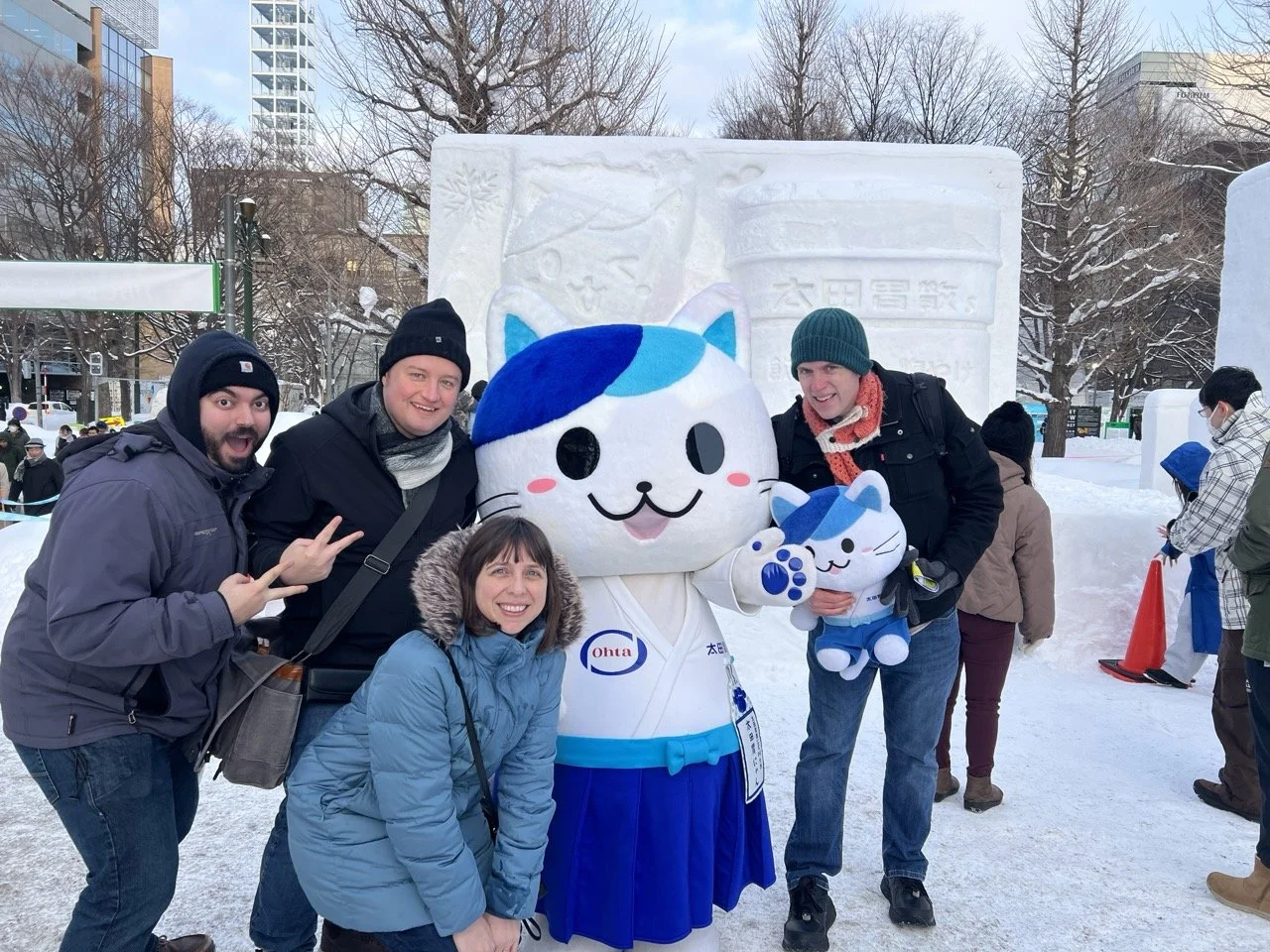
Also, since this is the first edition of this series, let’s start with a few…
DISCLAIMERS
We are not here to “Well, Actually” the game. We’re not going to go on about why one player should have done one thing or another. No one likes people who do that sort of thing on the internet anyway.
We are just here to talk about the cool places featured in the game. We travel across Japan a lot at PacSet and are super thrilled that this season is going to so many of the places we love and have been trying to boost for years.
We’ll toss in some stray/fun observations at the end. Everyone likes those, right? We’re just going to assume this is true.
Each location we talk about will feature a bit about where it is, the history/details, and whether you should go or not. We’ll also have a “Pick of the Week” in there. There will also be links to our trips here and there, because the AI robots are trying to take our jobs and we would really like it if you traveled with us humans. We’re way more fun than the robots, trust me.
EPISODE 1: NEVER BELIEVE IN YOURSELF
NISHI-OYAMA STATION (Both Teams)
Where: Ibusuki City, Kagoshima Pref.
What: The southern-most train station in Japan.
Details: As the teams mention in the episode and on The Layover (the Nebula-exclusive podcast that serves as a companion to the show), this station is considered legendary among Japanese railfans for being the southernmost station on the JR Network/the former national railway network. Before JR decided to make the Seishun 18 Ticket/Youth 18 Ticket suck, a lot of train die-hards would try to get this far on one of the famous “local trains only” tickets during its five-day use period.
Should you go? This is a place that’s more about the journey than the destination. It’s a chill station in the middle of a rice field. That being said, if you do want a gorgeous hike, Kaimondake to the west is easily one of the most underrated caldera hikes in Kyushu.
IBUSUKI (Both Teams)
Where: Ibusuki City, Kagoshima Pref.
What: Sand hot springs and a cool island pathway that appears at low tide, like a mystical bridge to a world of wonder/an island of trees.
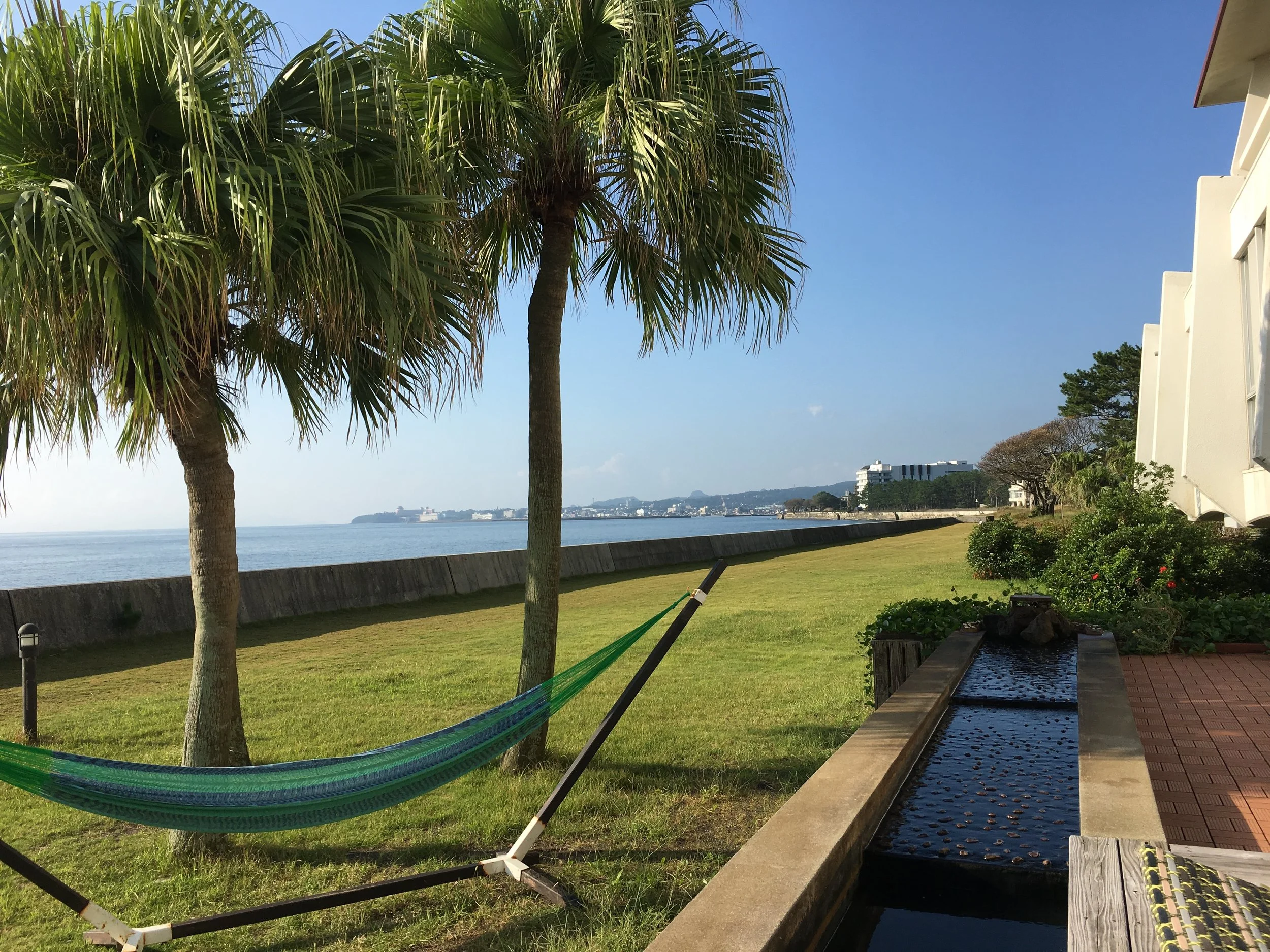
Details: This is a stretch, since this is where the teams stayed the night before shooting began, but we felt we had to shout out Ibusuki. The city has been a part of our Kyushu Hideaways itinerary for a while; it’s a hot spring town that is also part of a national park. The hook: this is a place where the hot spring waters flow into sand on the beaches, which means there are a number of iconic local spots where you can experience a hot sand bath.
The concept: you lie down, you get buried in sand soaked in hot spring water, and you sweat. When you’ve finished, you get out, rinse off (cold water is best if you want to get that neat/nice feeling when you go from hot to cold and shock your system), and then hop in a normal hot spring. The good times don’t end with the springs though; the coolest natural feature of Ibusuki is the sand bar that leads to Chiringashima Island, which occasionally appears at low tide and creates a walkway to the island (pro tip: hurry back across before that tide rolls back in).
Should you go? If you are a hot spring afficionado, you should visit Ibusuki once; it’s one of a kind.
KAGOSHIMA CITY (Both Teams)
Where: Kagoshima City, Kagoshima Pref.
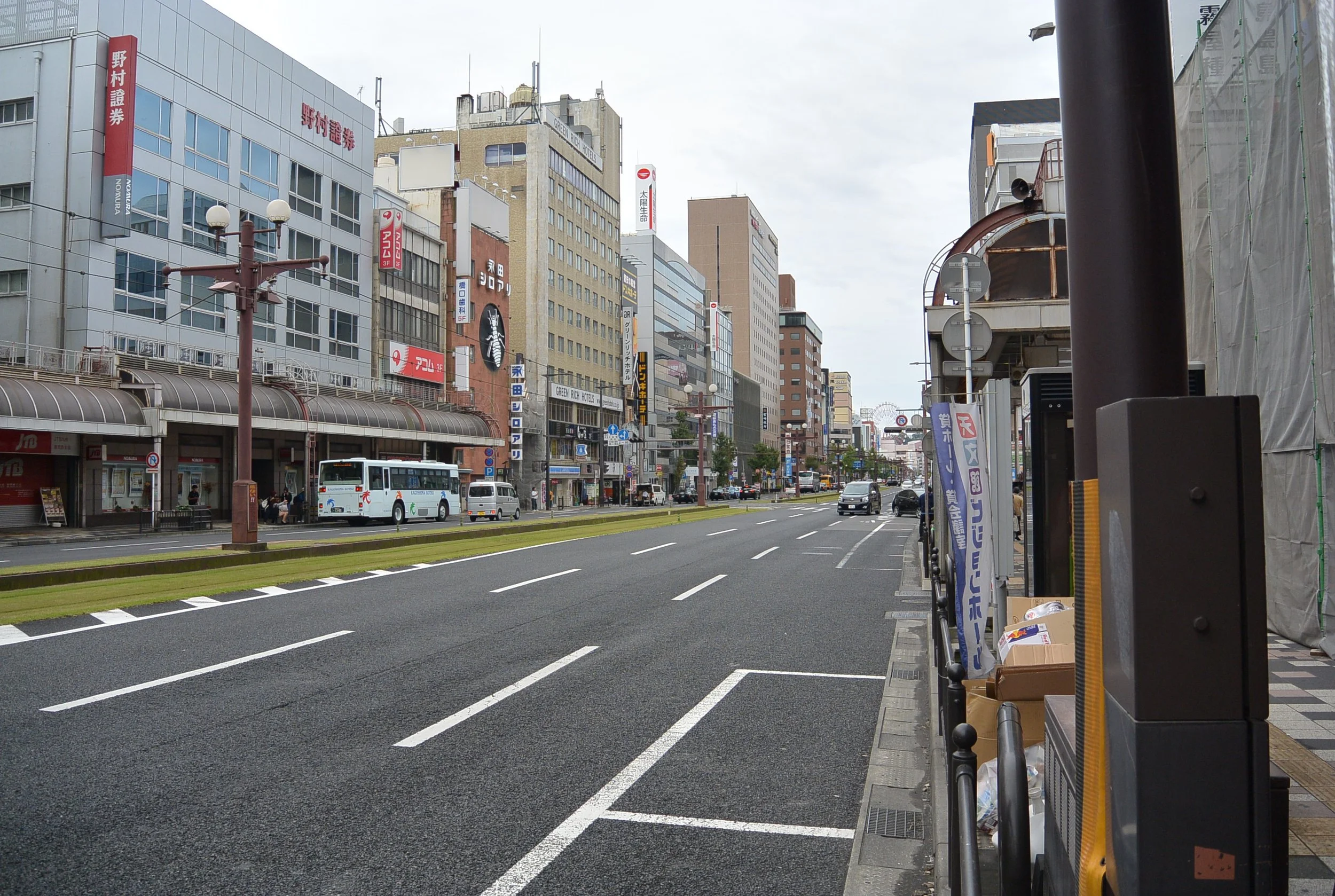
What: The capital city of Kyushu’s southernmost prefecture is a place that remains proud of its role in kicking off the Meiji Restoration in the 19th century. Famous for amazing pork, tons of shochu (this is not a sake spot, friends), and locals having to sweep up volcanic ash every once in a while. Your city has snow, theirs has ash. We promise this makes sense.
Details: With the arrival of the Kyushu Shinkansen in 2004, much of the new city’s new developments have centered around Kagoshima-chuo station (formerly Nishi-Kagoshima), including the shorter shopping arcade and station complex you see Adam and Tom running around on the two scavenger hunt attempts. The river you see them running by is home to the Museum of the Meiji Restoration, which is a great place to immerse yourself in the details that led the Satsuma Kingdom and Shimazu clan (more about them in a minute) to help kickstart the genesis of modern Japan. Going east from the station lies the larger Tenmonkan shopping arcade, which is where the city goes to shop/eat/drink/make the kind of decisions that those last three things lead to. East of there is the technical “center” of the city – the port that overlooks Sakurajima and its massive/still active volcano. While the volcano does erupt from time to time, the typical result is a bunch of ash that then lands on the city, which results in locals grumbling, picking up a broom, and adding sweeping to their list of chores.
Should you go? If are a fan of modern Japanese/post-Edo history, Kagoshima is a must-see. This area and the nearby onsen town of Kirishima are definitely worth your time if you love shochu and/or want to try some of Japan’s famous Kurobuta Pork.

SENGAN-EN (Team Sam & Ben Team Alpha Force)
Where: Kagoshima City, Kagoshima Pref.
What: A garden and imperial villa that was once the prized possession of the Shimazu Clan, one of Japan’s richest clans in the Edo Period. It’s also awesome.
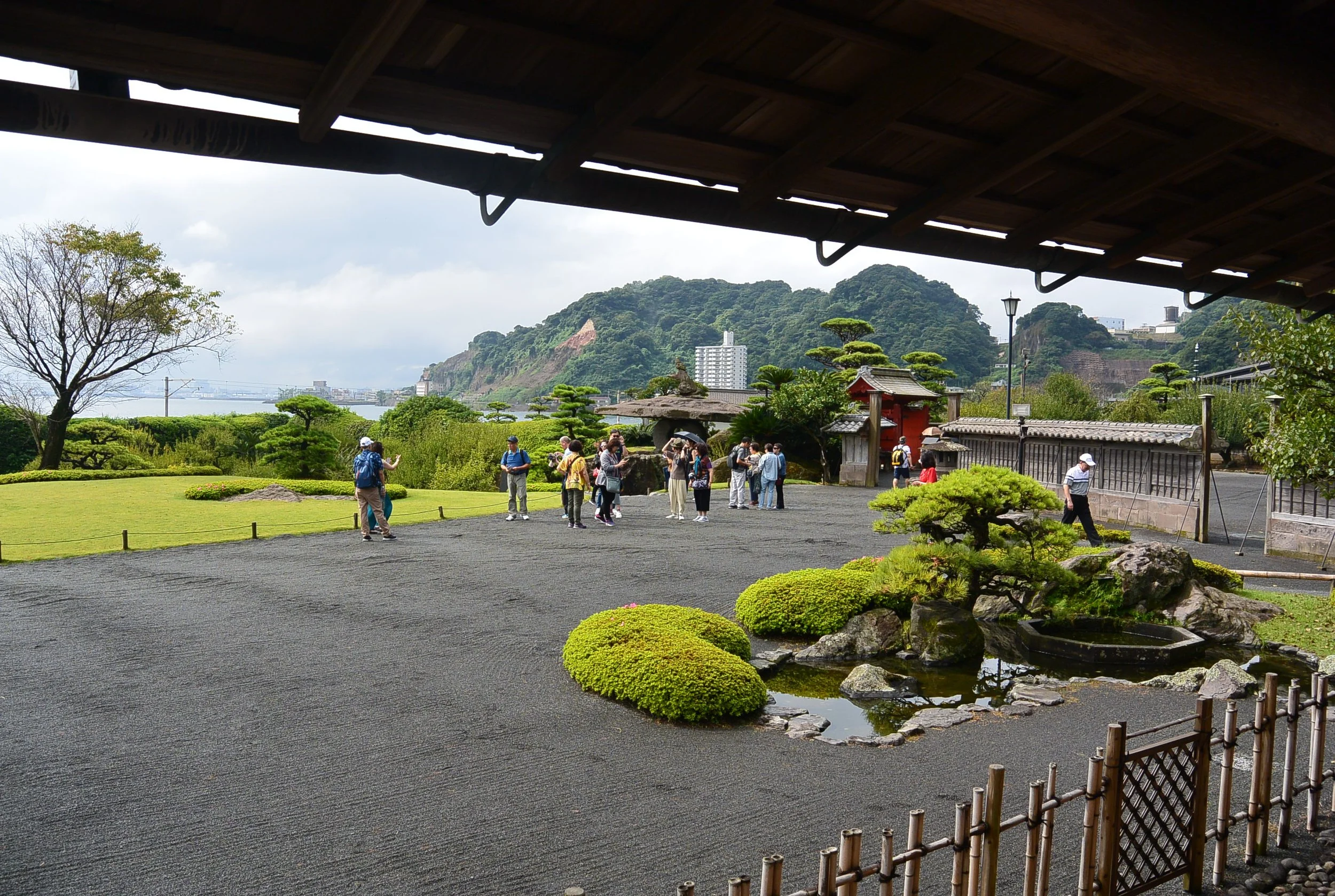
Details: Named a UNESCO World Heritage site in 2015, Sengan-en is a monument to the kind of opulence you get when you lead one of the richest clans in the Edo Period. It has long been the main stop of our Kyushu Hideaways trip, and was supposed to be featured on this year’s Island Hopper until a typhoon had other plans (“Plan Q” in action). Like other gardens that were formerly the domain of rich clans and fiefdoms, Sengan-en anchors the east end of Kagoshima City on a thin strip of land next to the water that backs up against verdant green mountains that once defined the city borders. It’s the perfect place for a fancy villa, and the Shimazu Clan (which, unlike other former clans, still owns and operates a number of major business interests in fields like construction and forestry) continues to own and run the gardens to this day as a museum. And lemme tell ya - they are doing a great job. This place rules.
The gardens and old villa house (constructed in 1658) are the main attraction here, and guests can explore the old property as well as sip green tea and look at the views. However, the grounds are also home to a number of facilities that honor and celebrate the area and its cultural heritage. Sam and Ben complete the Archery challenge at the Cultural Experience Hall, which really is worth a look, but there’s way more to see. The Shimazu have added cute cafes selling local snacks and sweets in various spots on the grounds, and there’s a Glass Center retailing the top-tier glassware that the Shimazu still make. If you’re less into stuff, grab your good shoes and ascend the mountain behind the garden, where lush forested paths lead to lookouts that not only overlook the grounds, but also feature the best views of Sakurajima from, well, anywhere. Sam, Ben, Adam and Tom mention on The Layover that this looks like the kind of place you could kill a lot of time, and they are right.
Our personal favorite spot on the grounds is the Cat Shrine that is dedicated to the cats that served the 17th Shimazu lord on a sea journey to the Korean peninsula. Legend says that the lord brought cats as timepieces, counting the days and time based on the dilation of their eyes. Two of the cats made it back to Japan, and the lord built a shrine for all of them at Sengan-en. The nearby shop sells all sorts of cat-themed goodies, so if you are a cat person (or you know one), you owe it to yourself to visit.
Should you go? While many people come to Kagoshima expecting to love Sakurajima most, we cannot imagine a universe in which anyone would not want to go to a place with some of the best volcano views in Japan that also has a gorgeous garden, interactive cultural exhibits, an honest-to-god cat shrine, and top-tier cafes with gorgeous seaside vistas. Definitely worth your time.
Speaking of cafes, let’s talk about
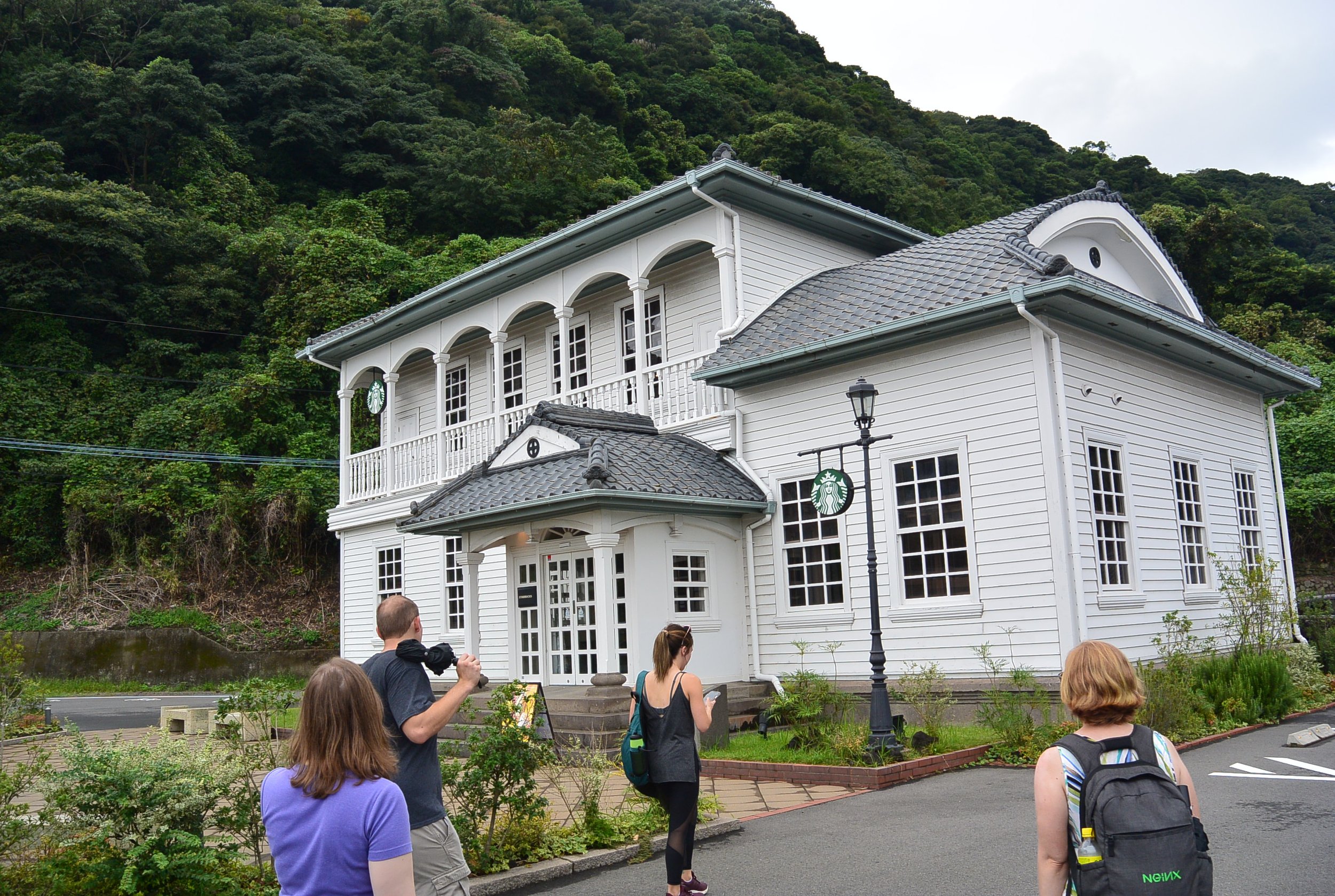
THAT FANCY STARBUCKS, aka Serigano Kinzankogyo Jimusho (Team Sam & Ben Team Alpha Force)
Where: Kagoshima City, Kagoshima Pref., next to Sengan-en
What: The former HQ of Shimazu’s Gold Mining corporate arm, built in the late 19th century in the fancy style of the time. And yeah, it’s a Starbucks now.
Details: Many travel blogs and online influencers have talked about the Starbucks in a historical teahouse in Kyoto, but we cannot understate how much the Seattle coffee giant has been killing it with the development of different spaces across Japan. The company has acquired or built a number of outlets in scenic places while doing their absolute best to respect the space they are inducting into the church of fast-order lattes and frappucinos.
Among the winners: their location in the historic Mojiko Station building (which Sam and Ben are heading towards at the end of this episode… maybe they’ll stop in?), aesthetic spaces near the canal in Toyama City and Port of Kobe (which we’ve visited many times on Omakase and Japan Holiday), a tea-themed location in the green tea capital of Uji, and this place, which the chain picked up from the Shimazu clan in the late 2010s. Like many of the other spots we listed, this building is on the national register of historic places, and the coffee giant has largely left the entire thing as is while also setting up a spot where you can get that caffeinated thing you need to improve your mood and fight Jet Lag.*
Should you go? If you like historical buildings and/or need a cup of coffee, then yes. Plus you can pick up that Japan Exclusive Mug Thing™ that your significant other asked you to get. You know the one.
MIYAZAKI CITY (Adam & Tom)
Where: Miyazaki City, Miyazaki Pref.
What: The capital city of Miyazaki, formerly the Jogasaki trading port. Also, half of Japan’s baseball teams do spring training around here.
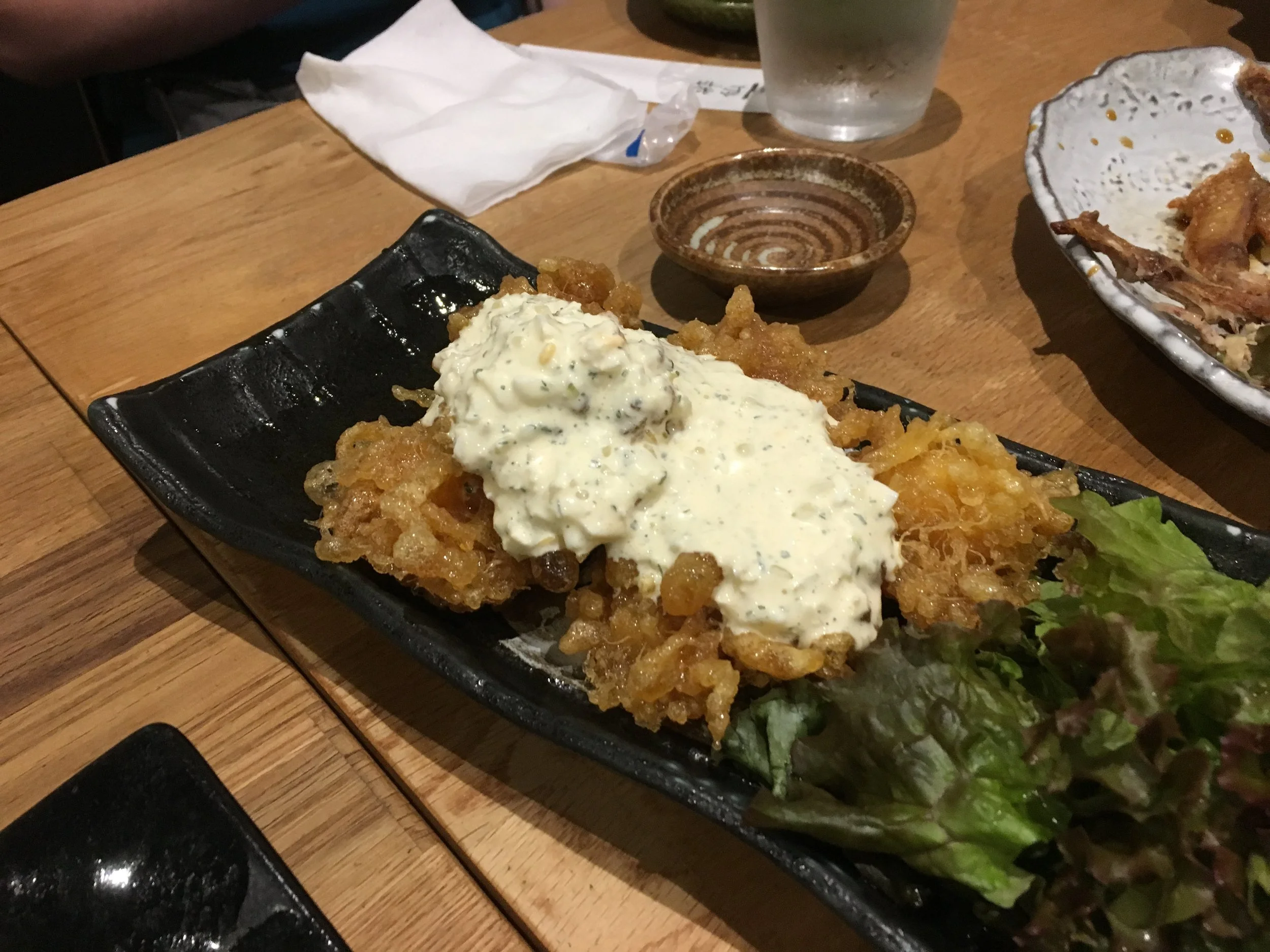
Details: Miyazaki is a bit of an enigma; a place where the pace is a little slower, the weather is a little better (most of the time), and there are sandy beaches overlooking the sea. The modern city has seen its share of ups and downs; being disconnected from the Shinkansen network has affected tourist traffic, but the nearby Seagaia resort (which we’ve called home on Kyushu Hideaways a number of times) still brings in golfers and stargazers alike. The city is close to a number of places of great import to Japanese folklore, including the seaside cave of Udo Shrine, the washboard island of Aoshima, and numerous iconic shrines, including Miyazaki Jingu (which appears in the episode). It’s gorgeous here… so why have we used a fried thing for the picture? That, my friends, is Miyazaki’s famous Chicken Nanban. And it’s one of the best reasons to visit: the chicken here is top tier.
Miyazaki’s chicken, from their iconic charcoal grilled Sumibiyaki to sweet Chicken Nanban, is well worth the trip here on its own. That’s the best way to experience a night in Miyazaki: go to Wakakusa-dori (which Adam and Tom pass on their scavenger hunt), find a chicken joint, order a beer or some shochu, and enjoy the most amazing bird you’ve ever had in your life.
Should you go? If that bit about chicken made your head turn or you want to see some shrines that are more picturesque than anything in Kyoto (yeah, we said it), Miyazaki is a great spot to visit.
THE 100 WATERS OF JAPAN
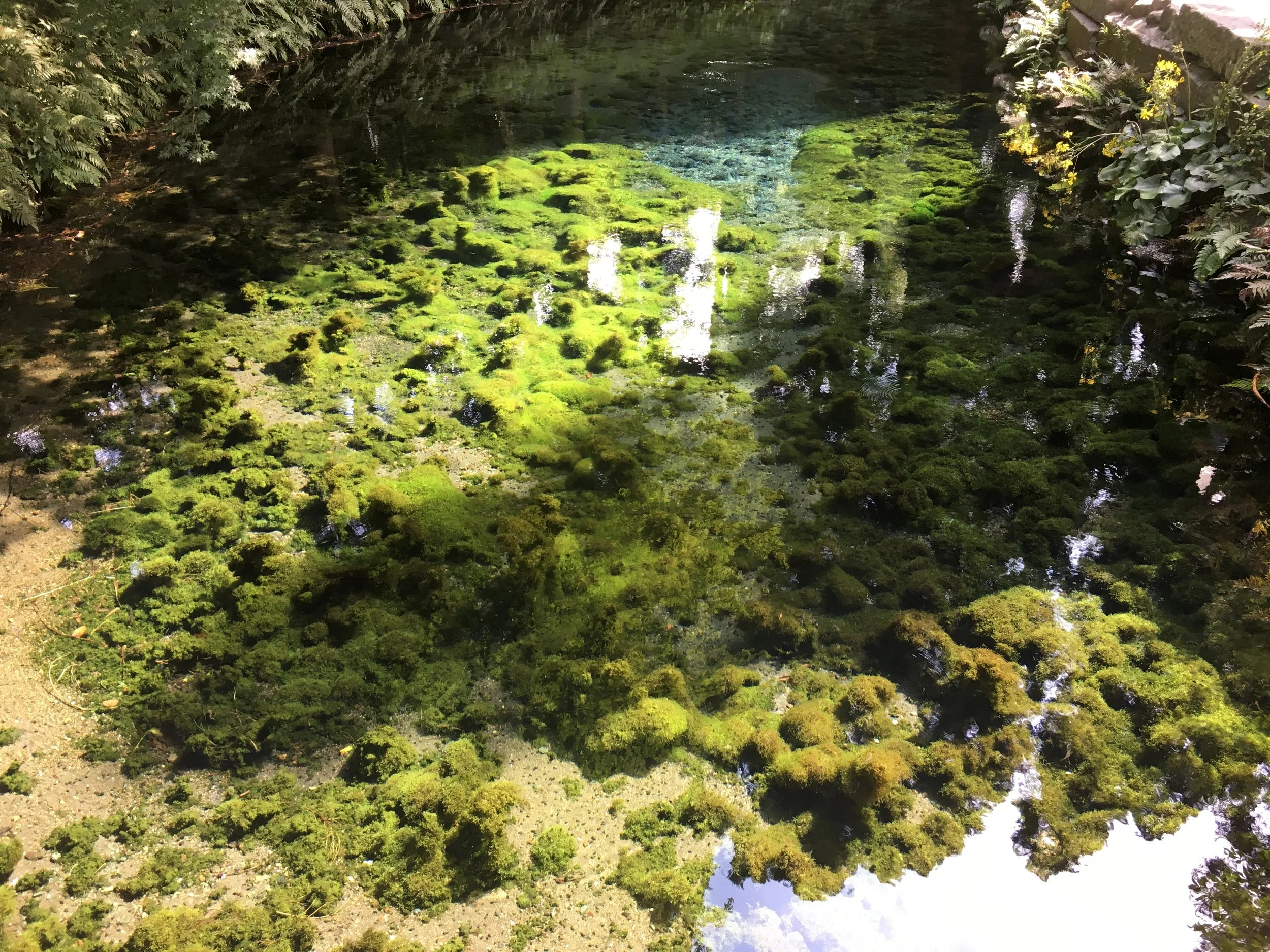
We wanted to toss a reference to this here since we think that the 100 waters referenced on the show are a lot cooler than they sound. Japan has a lot of nice spring waters (to say nothing of the hot springs), many of which exist around waterfalls and other cool spots. The one near Takamori, Kumamoto (pictured) is next to a cafe and shrine, which make it a lovely place to take a rest before climbing another mountain or hopping back in the car.
KUMAMOTO CITY (Team Sam & Ben Team Alpha Force)
Where: Kumamoto City, Kumamoto Prefecture
What: The second largest city in Kyushu (750K people), which unfortunately weathered the second major earthquake its face in a decade a few months after this season was shot.
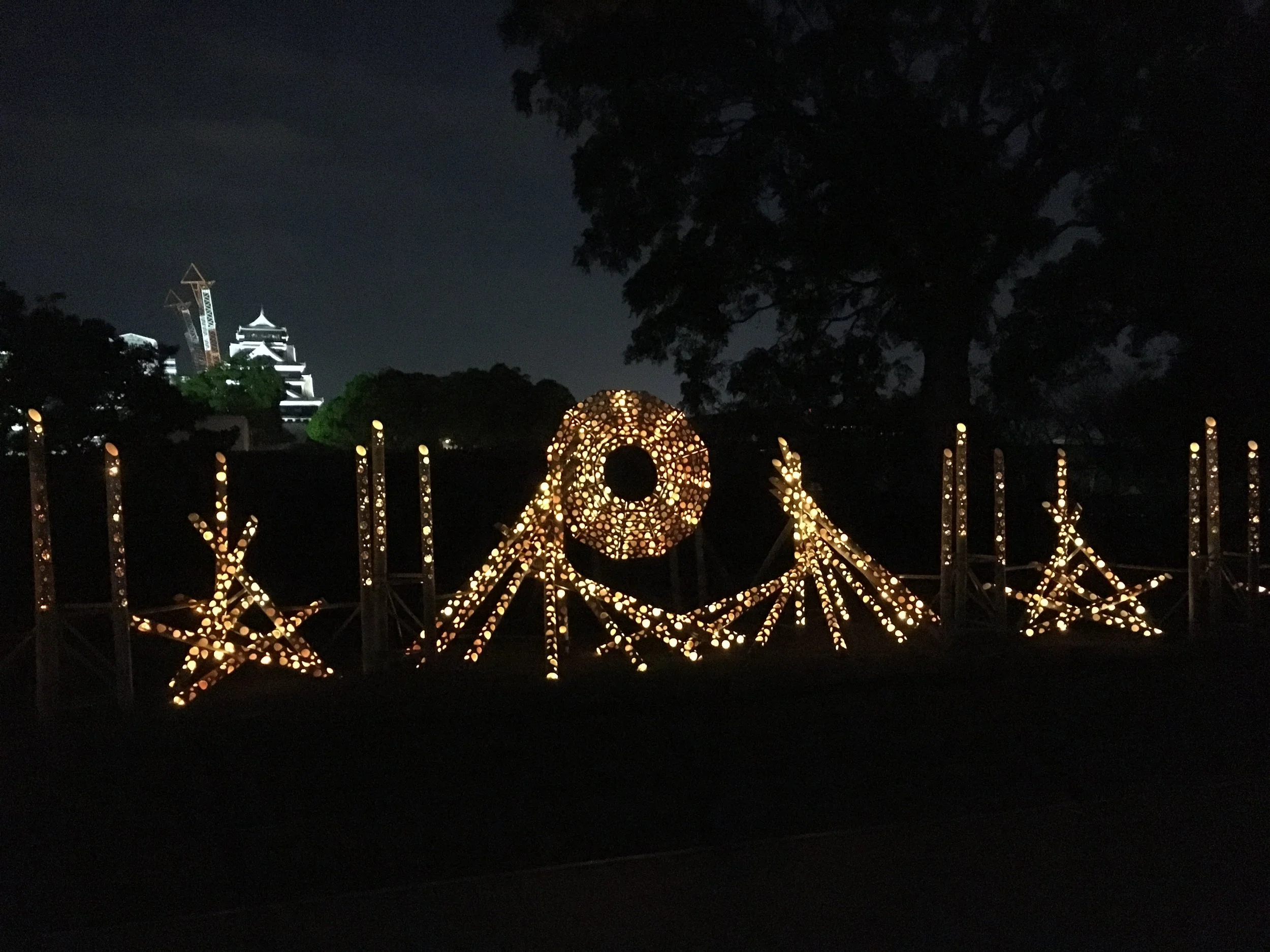
Details: Kumamoto is the quintessential castle town; a city that has stretched out from Kumamoto Castle when it was built, and continues to be defined by it. The area immediately surrounding the castle features a lot of shops for local specialties, not to mention a billion souvenirs featuring Kumamoto’s iconic mascot character, Kumamon. Just to the east of that is the city’s busy Shimotori shopping area, not to mention tons of bars and restaurants. The iconic Suizenji Gardens (well worth a look) are well worth a look, but if you love One Piece, you should also check out the massive Monkey D. Luffy statue just outside the prefectural office/capitol nearby.
Should you go?: The castle is cool, and the city is going to need our support and love after the recent disaster, so yes, absolutely please go. Unlike those places in Tokyo that you see on TikTok all the time, Kumamoto could really use your support.
ROUND 1 STADIUMS (Team Sam & Ben Team Alpha Force)
Where: All over Japan.
What: Arcade fun, karaoke, bowling, blinky lights, crane games, and more.
Details: While game centers (=video arcades) have been part of Japanese cityscapes for a long time, Round 1’s approach to creating a family-centric “all around” game center led to massive expansion within Japan in the early 2000s. The company’s approach for making a lot of entertainment traditionally found in more adult-centric spots (like karaoke and bowling) accessible to families has paid massive dividends, which makes sense; getting to win plushies from a UFO catcher, bowl a few frames, and scream into a microphone in the same building is a nice idea.
Should you go?: Of course; it’s fun. Round 1 has been a frequent host of typhoon bowling over the years, because apparently Round 1 refuses to stop even when a typhoon is coming through. We appreciate that.
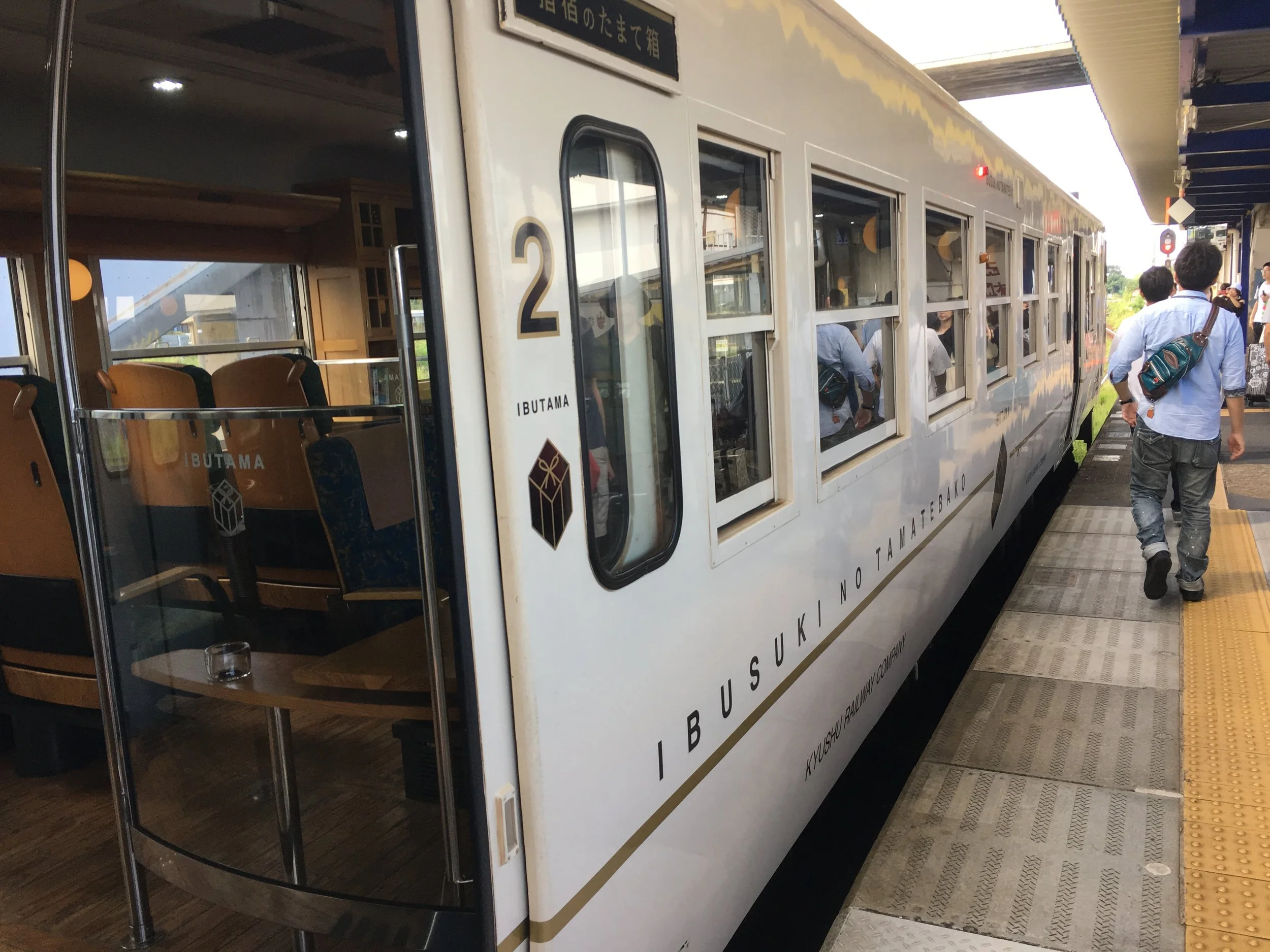
KYUSHU EXPRESS TRAINS: THE SONIC AND THE LOCAL TRAINS (Team Sam & Ben Team Alpha Force)
Where: All over Kyushu!
Details: We wanted to toss a few more notes about some of the trains featured in episode 1. When JNR/Kokutetsu privatized and split into the different JR companies in 1987, it was only a matter of time before each JR would try to distinguish itself a bit (we’ve talked about the craziness around that in this space a few times before). Of all the JRs, JR Kyushu’s current train sets are some of our favorites.
The local lines (the ones with what Ben describes as “QR Code flooring” feature a really cool wood aesthetic that, if we are being honest, feels rather nice for a local train. It’s a nice touch, but the express services (such as the Sonic and Nichinan) are really nice trains with a lot of comfortable features – not to mention the limited long distance trains like Yufuin no Mori and Ibusuki no Tamatebako (pictured) that feature local microbrews, snacks, souvenirs, and even a train attendant bringing around props to take photos with.
The Sonic (the train described as a rolling museum in this episode) has been updated a number of times, which makes sense; the train is competing with the Shinkansen on this route, which is operated by the competition (JR West) east of Hakata Station in Fukuoka. Kyushu has a lot of great scenic train journeys, and while I wouldn’t try for the iconic Seven Stars train Sam shouts out, there are lots of great alternatives. Our personal faves: Yufuin no Mori and the non-JR Rail Kitchen Chikugo, which is run by the private Nishitetsu corporation that Ben and Sam use to avoid Saga Prefecture on their way north.
ABOUT THE HEAT STROKE/HEAT EXHAUSTION SCENE
Here’s the part of this article where the people who have traveled with PacSet are going to roll their eyes, because they’ve heard us say this a million times: while it’s always been harder for us to get guests on our winter trips, we’ve never had to deal with frostbite. Heat exhaustion, however… we’ve seen our fair share of hospital rooms for that over the years.
If you’re going to go to Japan in the summertime, you absolutely need to pace yourself and drink your water.
What happened to Tom in this episode is ridiculously common, and you don’t need to be pushing yourself like Tom was to feel faint. We’ve hauled people off street corners in Harajuku, sat people down in cafes with bottles of Pocari Sweat, and so much more. The humidity in Japan is really no joke, and looking at the temp in Japan and thinking “oh, I can handle that” does not mean you can handle that.
Drink your water. Take breaks. Pace yourself. Japan will still be there when you’ve cooled off.
Okay, back to the fun stuff…
Random Notes
We appreciate Adam’s looking up how to say “Ehime”, but we do like the sound of Tom’s “E-Haim” just because it sounds like the group name Haim would use if Hatsune Miku joined them on tour.
The gentle laugh that the cab driver gives in response to Sam’s request is a laugh we’ve heard before. The boys shout out cabbies in Japan on The Layover and they really are the best. Download GoTaxi before you go to Japan, kids.
Shout out to the graphics team on the show for that Sam graphic they superimposed over the timer.
We have looked into getting a Seven Stars resy for our trips, but yeah, two days on that thing costs more than fourteen days with us. Which reminds us, hey – you should join us sometime.
This is the first time we’ve done something like this on this blog, and we hope you enjoyed it. We’ll be back next week to talk Episode 2.
*omg we said the thing!!!